Hidden Water Leaks in Kitchens: Detection, Remediation, and Rebuilding
9/28/2026
9/28/2026
Hidden kitchen water leaks can often be identified through musty odors, swollen cabinets, damp flooring, stains, or unexplained moisture. Finding and stopping the source quickly helps limit mold growth, structural damage, and expensive kitchen repairs.
Water leaks do not always create visible puddles. A slow leak behind a cabinet, beneath a dishwasher, or inside a wall can continue damaging building materials for weeks or months. This guide explains common causes of hidden water leaks in kitchens, warning signs to watch for, professional detection methods, the remediation process, and when rebuilding becomes necessary.
Hidden water leaks can damage more than the visible surface of your kitchen. Water may spread beneath flooring, behind drywall, under cabinets, or into wall cavities. By the time the damage becomes noticeable, materials may already be weakened or contaminated.
Moisture that remains trapped creates favorable conditions for mold growth. It can also cause wood to swell, flooring to warp, drywall to deteriorate, and fasteners or structural components to corrode. The longer a leak continues, the more difficult the restoration process may become.
A small plumbing connection can create significant damage when it leaks continuously. Kitchen water leak remediation should therefore address both the immediate water source and the materials affected by moisture. Simply drying the visible surface without investigating hidden areas may leave the underlying problem unresolved.
Kitchen plumbing, appliances, countertops, and seals all create potential points of failure. Understanding common causes makes it easier to recognize early warning signs and arrange kitchen leak detection before the damage spreads.
Supply lines connect water fixtures such as sinks, faucets, and water filtration systems to the plumbing network. Loose fittings, aging hoses, damaged valves, and deteriorated connections can cause slow leaks inside sink cabinets or behind walls.
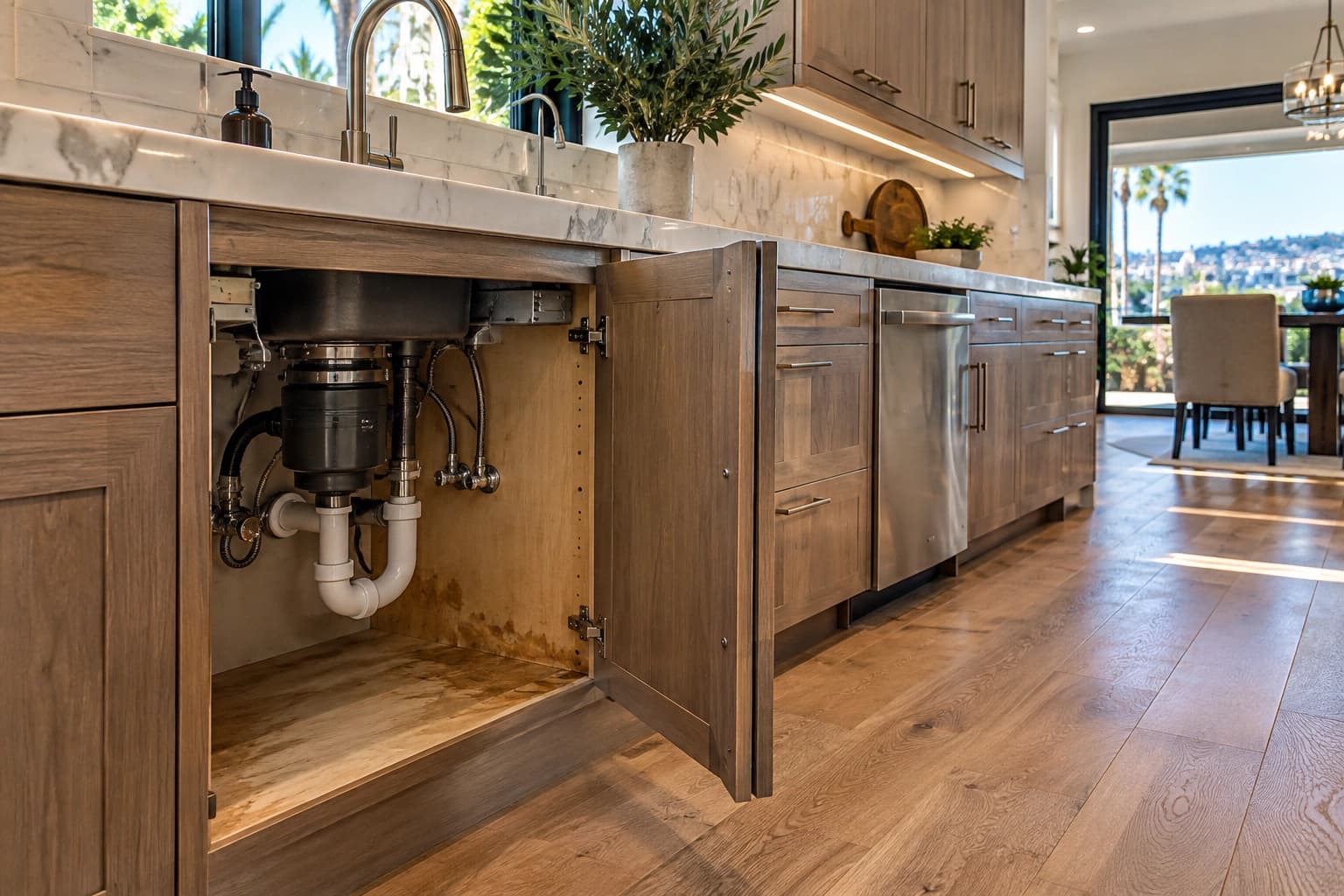
Leaks beneath a kitchen sink may remain unnoticed because cleaning supplies and stored items hide the plumbing. Check for damp cabinet bottoms, water stains, corrosion, or moisture around shutoff valves. Even a small amount of recurring water can damage particleboard cabinetry and nearby flooring.
Drainpipes carry wastewater away from the sink and dishwasher. Cracked pipes, loose connections, damaged seals, and improperly secured dishwasher hoses can release water whenever the appliance operates or the sink drains.
Dishwasher leaks may spread underneath cabinets or flooring instead of appearing directly in front of the appliance. Repeated exposure can damage the subfloor and create unpleasant odors. A professional inspection can help identify whether the issue involves the appliance, plumbing connection, or surrounding materials.
Refrigerators with ice makers or water dispensers rely on supply lines that may run behind the appliance or through nearby cabinetry. A kinked hose, loose fitting, cracked line, or damaged connection can release water gradually.
Because refrigerators often remain in the same position for long periods, leaks may go unnoticed. Moisture behind the appliance can damage flooring, baseboards, and lower cabinets. Inspect the surrounding area whenever you move or clean behind the refrigerator.
Caulking around sinks, backsplashes, and countertop connections helps prevent water from entering gaps. Over time, caulk can crack, shrink, separate, or lose its seal.
Water may then seep into cabinet edges, walls, or countertop supports during routine cleaning and use. Although failed caulking may seem minor, repeated moisture exposure can contribute to water damage behind kitchen cabinets and deterioration of adjacent materials.
Some signs of hidden water leaks are subtle, while others indicate that moisture has already affected building materials. Watch for the following conditions:
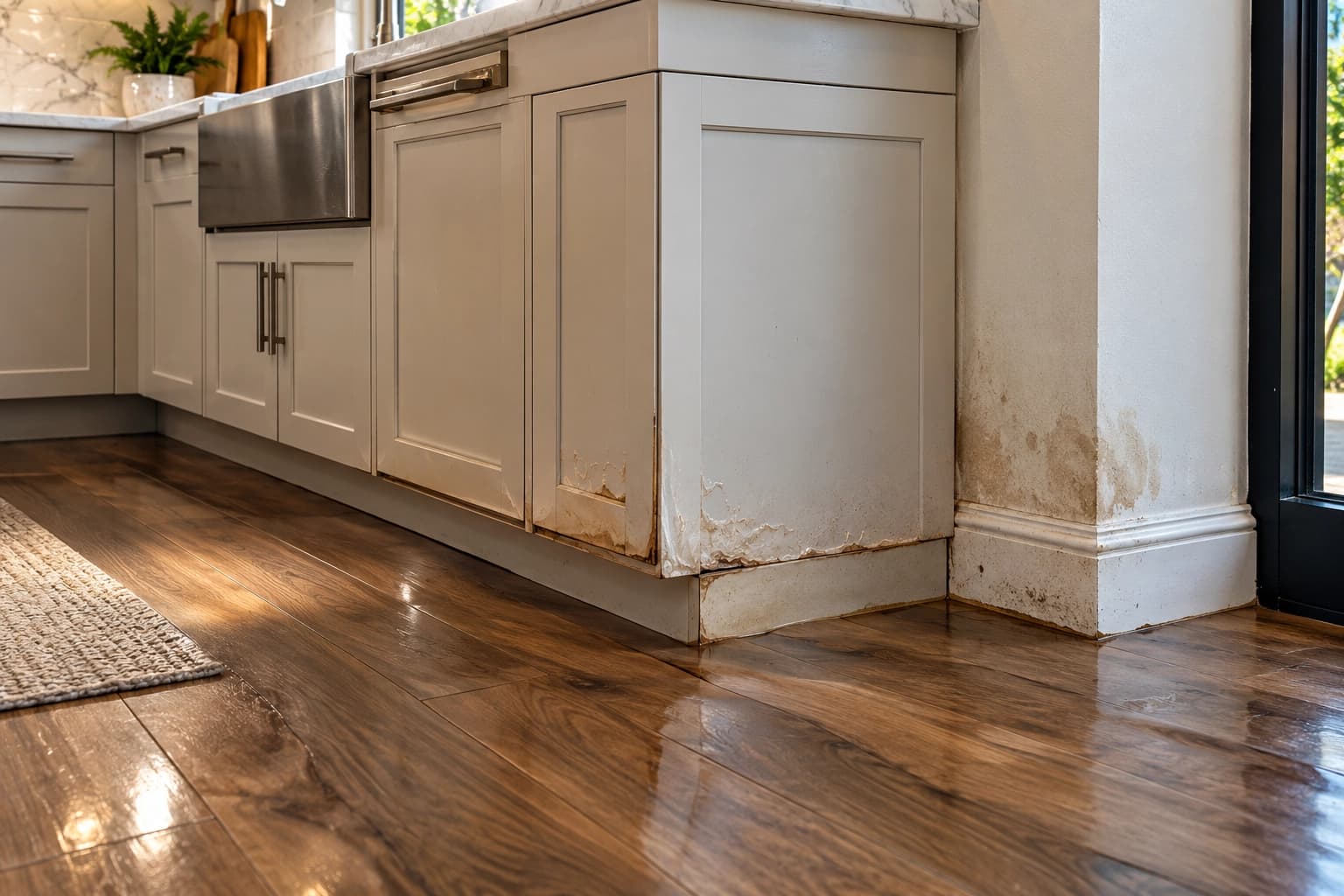
Effective kitchen water leak detection involves locating the water source, identifying how far moisture has spread, and checking materials that may not be visibly damaged. A careful inspection can prevent unnecessary demolition while ensuring hidden damage is not overlooked.
Start by checking the areas beneath the sink, around the dishwasher, behind the refrigerator, and near water filtration equipment. Remove stored items so you can inspect cabinet corners, plumbing connections, and cabinet flooring.
Look for wet surfaces, discoloration, swollen materials, corrosion, and damaged seals. Run fixtures and appliances one at a time, when safe, while observing exposed connections. Do not operate equipment if electrical components are wet or the situation creates a safety risk.
Water can travel away from the original leak through flooring systems, wall cavities, and gaps around cabinets. Inspect nearby baseboards, flooring transitions, drywall, and rooms sharing the same wall.
A stain may appear several feet away from the actual source. For example, a leak beneath a sink could spread under flooring before becoming visible near a wall or doorway. This is why the location of a stain does not always identify the exact origin of the leak.
Professional inspections may use moisture meters, thermal imaging, visual assessment, and targeted access points to identify damp areas. These tools can help locate moisture behind surfaces without immediately removing large sections of cabinetry or drywall.
Moisture readings should be interpreted in context because building materials naturally contain different moisture levels. A qualified professional can compare affected areas with surrounding materials and determine where further investigation is appropriate.
Contact a water damage professional when moisture continues returning, the leak source is unclear, mold is visible, flooring feels soft, or water has entered walls or cabinets. Professional help is especially important when the damage involves electrical systems, contaminated water, or structural materials.
Kitchen water leak remediation focuses on controlling moisture, removing damaged materials, cleaning affected areas, and determining what can be restored. The exact process depends on the leak source, water exposure, material type, and length of time the area remained wet.
The first step is to stop the leak safely. This may involve closing a shutoff valve, disconnecting a damaged appliance, or arranging plumbing repairs. The affected area should then be assessed to identify visible and hidden damage.
An inspection should consider cabinets, flooring, drywall, insulation, subfloor materials, and nearby structural components. Photographs and moisture readings can help document conditions before removal or reconstruction begins.
Standing water should be removed promptly using appropriate extraction equipment. Materials that cannot be dried effectively may need to be removed, especially when they have absorbed contaminated water or developed extensive deterioration.
Water-damaged cabinets, drywall, insulation, and flooring should be evaluated individually. Not every affected material requires replacement, but swollen particleboard and severely deteriorated materials often cannot be restored to their original condition.
Drying requires more than removing visible water. Air movement, dehumidification, and access to concealed spaces may be necessary to reduce moisture levels throughout the affected area.
Cleaning methods should match the type of water damage and the materials involved. Prompt drying can reduce the risk of mold growth, but materials that remain wet for an extended period may require additional cleaning, removal, or specialized treatment.
For related concerns, homeowners can review this information about addressing mold behind drywall , particularly when moisture has entered concealed wall spaces.
Water exposure can affect subfloors, wall framing, cabinet supports, and other components. These areas should be inspected before new finishes are installed.
Indoor air quality may also be affected when mold, contaminated materials, or persistent dampness is present. Remediation should address the source of moisture and any affected materials rather than covering the problem with new flooring, paint, or cabinetry.

Not every kitchen leak requires a complete remodel. Minor damage may only need plumbing repairs, drying, cabinet component replacement, or localized flooring work. Rebuilding becomes more likely when moisture has affected multiple connected materials or the existing kitchen cannot be safely restored.
When water damage affects hardwood flooring, the restoration approach should account for the type of wood, moisture exposure, and condition of the subfloor. The appropriate repair strategy may differ from standard surface refinishing, as explained in this resource on restoring hardwood floors after water damage .
Hidden kitchen water leaks can damage cabinets, flooring, drywall, subfloors, and structural materials without creating obvious puddles. Early detection, prompt water removal, thorough drying, and accurate damage assessment are essential for effective kitchen water damage repair.
If your kitchen shows signs of persistent moisture, musty odors, damaged cabinets, or unexplained water usage, investigate the problem before it spreads. MBK Remodel can help coordinate remediation, repairs, and rebuilding when water damage affects the safety, appearance, or functionality of your kitchen. You can contact MBK Remodel to discuss your property’s condition and the next steps.
How Can You Tell if There Is a Hidden Water Leak in Your Kitchen?
Common signs include musty odors, swollen cabinets, warped flooring, peeling paint, water stains, mold growth, and moisture that returns after using a fixture or appliance. A professional inspection may be needed when the leak is behind walls, beneath flooring, or inside cabinetry.
Can a Hidden Kitchen Water Leak Cause Structural Damage?
Yes. Prolonged moisture can damage subfloors, wall materials, framing, cabinet supports, and other building components. The risk depends on the amount of water, how long the materials remain wet, and the location of the leak.
How Long Does Kitchen Water Leak Remediation Take?
The timeline depends on the leak source, the affected area, material damage, drying requirements, and whether rebuilding is necessary. A small localized repair may take less time than a project involving cabinets, flooring, drywall, and structural components.
Should Water-Damaged Kitchen Cabinets Be Repaired or Replaced?
The decision depends on the cabinet material, severity of swelling or deterioration, duration of moisture exposure, and structural condition. Solid components may sometimes be repaired, while severely swollen particleboard or delaminated panels often require replacement.