The Hidden Costs of Moving Plumbing and Gas Lines in a San Diego Kitchen Remodel
6/3/2026
6/3/2026
Moving your kitchen sink, dishwasher, or gas range to a new center island is the ultimate way to open up a cramped San Diego floor plan. However, relocating these utility lines isn’t just a design choice, it alters the mechanical footprint of your home.
Before you tear out your cabinets, here is what you need to know about the hidden costs, foundation challenges, and local permits required to move plumbing and gas lines in Southern California.
On average, moving a sink, dishwasher, or gas range even a few feet can add anywhere from $1,500 to $6,500+ per fixture to your kitchen remodeling budget.
The exact cost depends heavily on whether your home is built on a concrete slab or a raised foundation. Moving a gas line typically ranges from $1,200 to $3,500, depending on distance and local seismic safety codes.
Because structural mechanical changes require city permits and inspections throughout San Diego County, you should also factor in an extra 1 to 3 weeks of administrative and inspection time to your project schedule.
In San Diego, the type of foundation under your feet is the single biggest factor in your plumbing budget. Your home will almost certainly fall into one of two categories, and the price difference between them is massive.
Most modern tract homes in neighborhoods like Carmel Valley, Rancho Bernardo, and Scripps Ranch are built on solid concrete slabs.
Older, historic homes in areas like North Park, Mission Hills, or older coastal La Jolla often feature raised subfloors with a crawlspace underneath.
Pro-Tip: If you have a concrete slab and your budget is tight, try keeping your sink and dishwasher on the same wall. We can often slide them a foot or two left or right inside the cabinet baseboards without ever touching the concrete floor.
A water leak ruins your floors; a gas leak puts your home in danger. Because of this, relocating a gas line for a new oven or cooktop is one of the most heavily regulated aspects of a San Diego kitchen remodel.
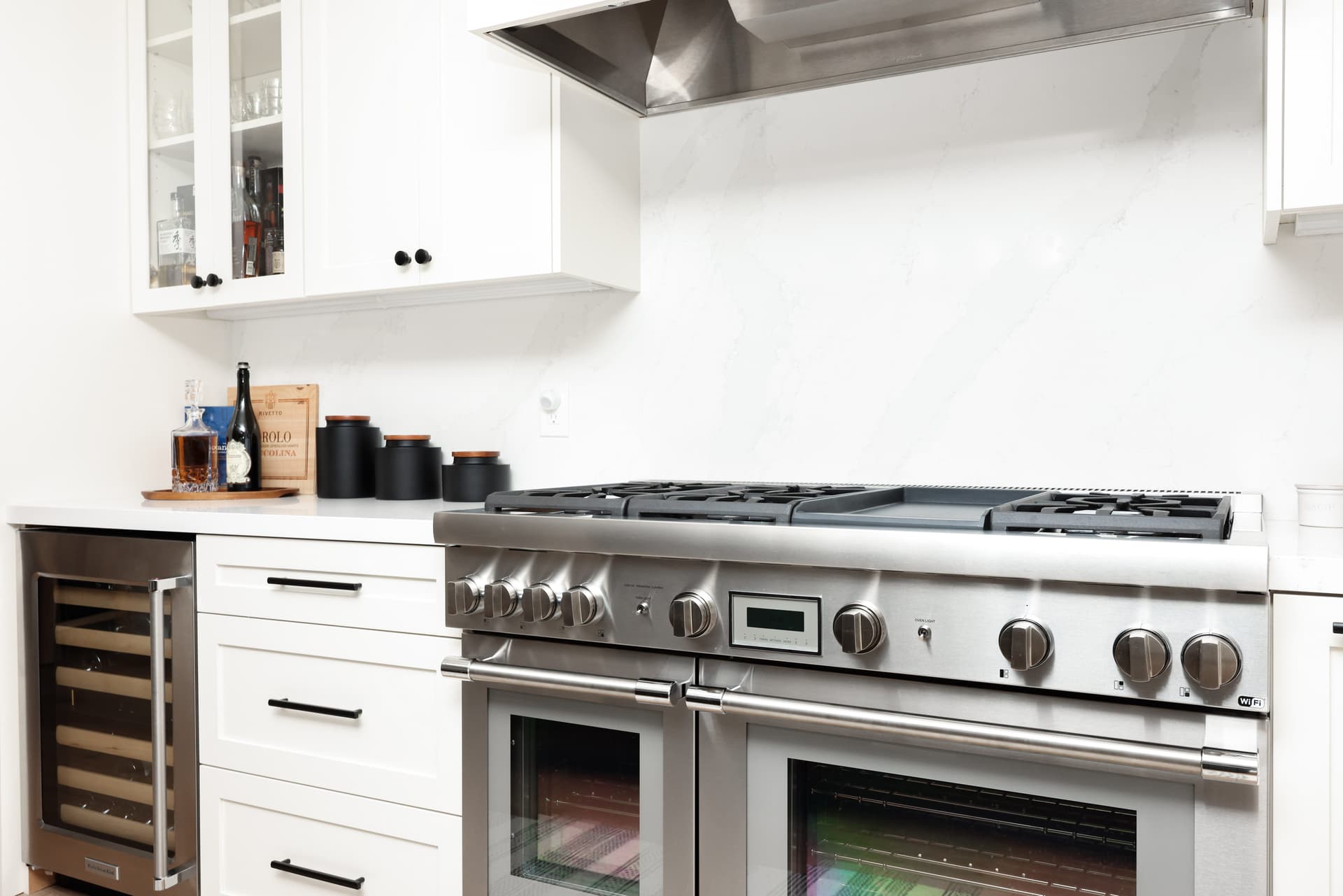
If you are upgrading from a standard stove to a luxury, pro-style range from brands like Wolf or Thermador, simply moving your existing gas pipe isn’t enough. Most older San Diego homes were built with standard 1/2-inch gas lines that max out at around 60,000 BTUs.
Because a high-end chef’s range can easily demand over 100,000 BTUs, we must run an entirely new, larger gas line, usually 3/4-inch or 1-inch thick, all the way back to your main gas meter to ensure your appliances function correctly.
Just like plumbing, gas lines must be routed carefully based on your home’s structural framing. Burying a gas line in a concrete trench requires specialized protective sleeving and venting to prevent underground gas buildup, making it an expensive and labor-intensive process.
To save our clients thousands of dollars on trenching, our crews will often route the new gas pipe up through the wall, across your attic space, and drop it down precisely where your new island or cooktop will be installed.
San Diego is earthquake country, and the state building codes stringently reflect that reality. Under California law, if your remodel involves significant alterations to your gas piping or exceeds a certain permit value, you are legally required to install an automatic seismic gas shut-off valve at your main meter.
In the event of a 5.1 magnitude earthquake or higher, this valve automatically senses the motion and slams your gas line shut to prevent post-earthquake fires. It adds a few hundred dollars to your permit costs, but it is a non-negotiable safety upgrade for local renovations.

When you move structural or mechanical lines, the budget isn’t the only thing that expands. The timeline takes a hit, too. In the City of San Diego, any project that involves moving plumbing, gas, or electrical lines legally requires a permit from the Development Services Department (DSD).
Even with the city’s newer expedited permitting processes, you still have to factor in the inspection schedule. You cannot simply move a gas line and immediately cover it with drywall. The city requires a rough-in inspection where a municipal inspector visits the home to verify the exposed pipes meet safety codes.
If the inspector finds an issue, work stops until it is fixed and re-inspected. If it passes, the crew can finally install the drywall, cabinets, and flooring before calling the inspector back for a final sign-off. As your licensed contractor, MBK Remodel handles this entire bureaucratic process and all the red tape for you, but you should still expect these mandatory city checkpoints to add at least one to two weeks to your overall kitchen remodeling timeline.
Every major kitchen layout change comes down to a simple question: Does the improved flow justify the extra line-item costs on your proposal?
If your kitchen already has a functional workspace and you are purely looking to update outdated cabinets, countertops, or appliances, it is usually best to keep your fixtures where they are. Moving a sink or range just 12 inches for aesthetic design reasons rarely changes how you use the room, but it will still trigger the need for expensive city permits, trenching, and plumbing relocations.
If your current kitchen isolates the cook from the rest of the family, or if a structural wall makes the space feel like a dark, claustrophobic hallway, paying to move the lines is completely worth it. Relocating the sink or cooktop to a central island allows you to knock down dividing walls and create a highly functional, open-concept living area.
This structural transformation dramatically improves the daily usability of your home and provides the highest return on investment when it comes time to sell your property.
Tackling the hidden mechanical infrastructure beneath your kitchen floors requires specialized craftsmanship and local code expertise. You don’t have to guess what lies beneath your slab or crawlspace alone.
At MBK Remodel, we provide comprehensive design-build services across San Diego County. Our team handles everything from structural engineering and layout design to pulling city permits and executing the final trim plumbing.
Don’t guess what lies beneath your floors. Let our team do a site visit to assess your foundation and plumbing framework. Visit our contact page today to schedule your complimentary in-home consultation, and we will build a detailed, itemized labor proposal to bring your dream kitchen layout to life.
How much does it cost to move a kitchen sink in San Diego?
Moving a kitchen sink or dishwasher typically adds $1,500 to $6,500+ to your remodel. The final cost depends on your foundation. If your home is built on a concrete slab, plumbers must trench through the floor, which significantly increases labor and demolition costs compared to a home with a raised crawlspace.
Why is moving plumbing more expensive on a concrete slab?
Homes built on concrete slabs have plumbing pipes buried inside the concrete. To move the lines, a crew must use jackhammers to cut a trench in the floor, install the new pipes, and repour the concrete. This structural work adds thousands of dollars in labor and demolition.
Do I need a permit to move my gas range in San Diego?
Yes. Moving a gas line legally requires a permit from the San Diego Development Services Department (DSD). Because gas line relocation involves serious safety codes, the city requires mandatory inspections (like a rough-in inspection) before you can cover the newly moved pipes with drywall.
Do I need a seismic gas shut-off valve for my remodel?
Yes. Under California law, if your remodel involves significant alterations to your gas piping, you are legally required to install an automatic seismic gas shut-off valve at your main meter. This valve prevents post-earthquake fires by automatically shutting off the gas during a 5.1 magnitude earthquake or higher.