Water Damage Restoration: Saving Your Hardwood Floors and Baseboards After a Leak
7/27/2026
7/27/2026
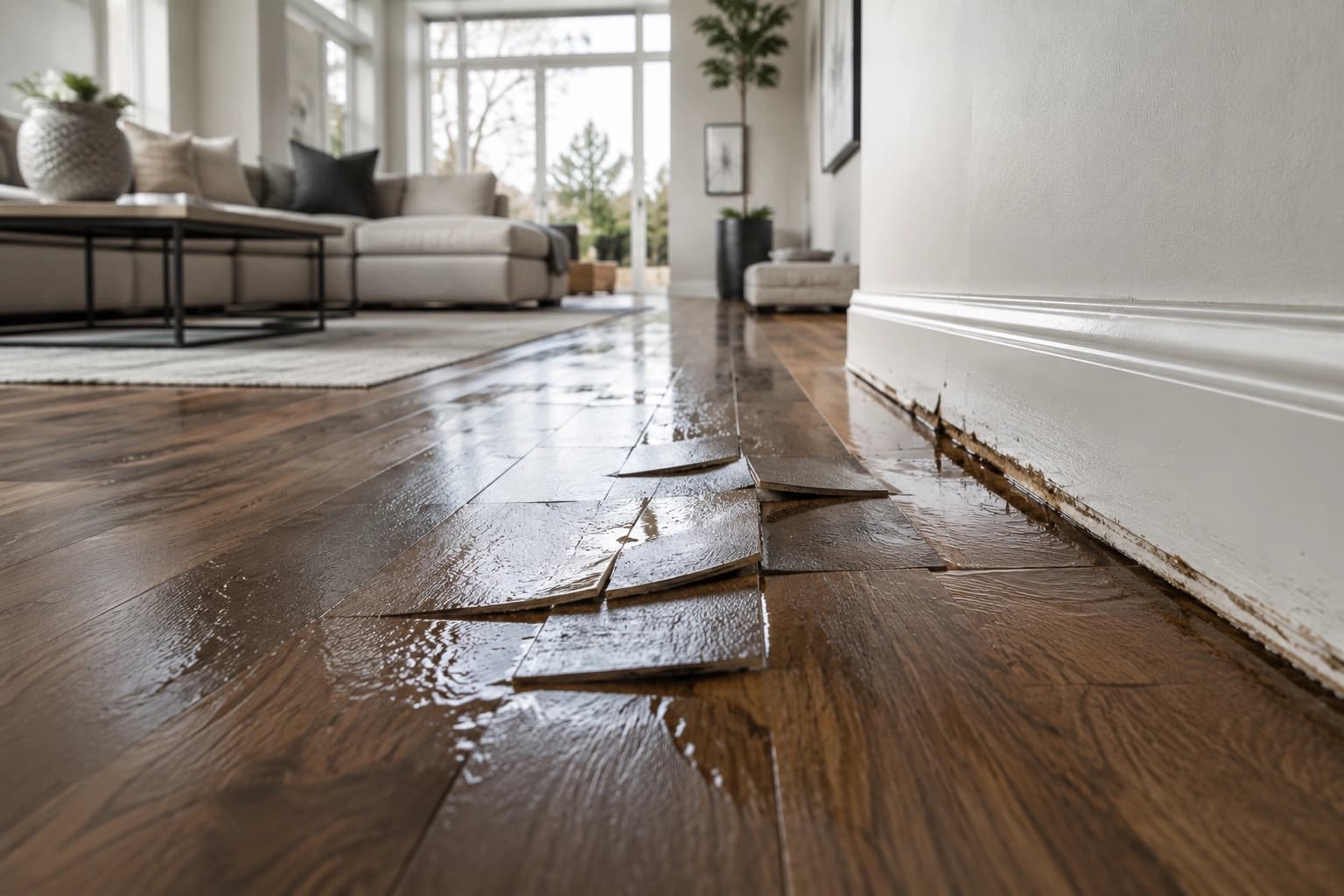
Water damage restoration begins with acting quickly after a leak. The sooner moisture is removed, the better the chance of saving your hardwood floors, baseboards, and other building materials before permanent damage occurs.
Whether the leak comes from a burst pipe, appliance, or roof, water can spread beneath flooring and behind walls within a short time. Understanding the early warning signs and taking the right first steps can reduce repair costs and help protect your home from long-term damage.
Water may seem harmless at first, but it can quickly affect flooring, drywall, insulation, and wood framing. Hardwood floors and baseboards are especially vulnerable because they absorb moisture easily.
Delaying cleanup allows water to penetrate deeper into building materials, making drying more difficult and increasing the risk of warping, swelling, and mold growth. In many cases, damage that could have been repaired becomes a full replacement simply because the response was delayed.
Hardwood flooring and wood trim are designed to last for many years, but excessive moisture can change their appearance and structural stability.
As wood absorbs water, it expands, contracts, and may lose its original shape. Baseboards can also swell, separate from the wall, or begin to deteriorate if moisture remains trapped behind them.
Identifying water damage early gives you the best opportunity to save your flooring and trim.
Common warning signs include:
If these signs appear after a leak, it’s important to begin drying the area immediately before the damage spreads.
Moisture behind walls should also be taken seriously, especially if mold is suspected. Learning how to fix mold behind bathroom drywall can help homeowners understand the risks of hidden moisture.
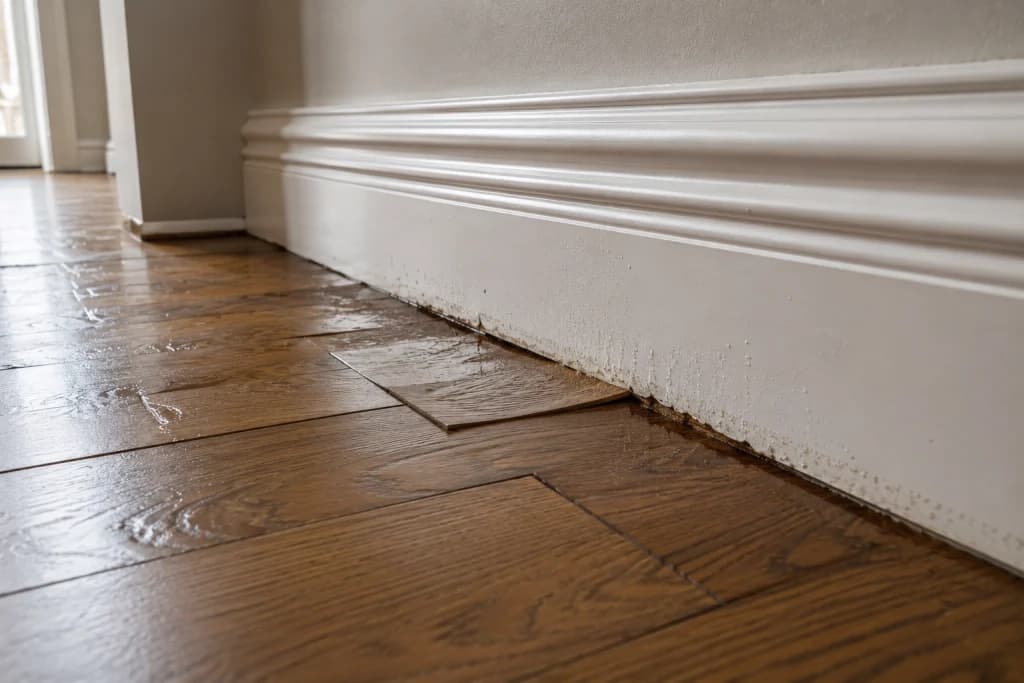
Not all water damage can be reversed. If moisture remains trapped for an extended period, hardwood flooring may buckle, separate, or rot beyond repair.
Similarly, baseboards that have swollen significantly or developed mold often need replacement rather than restoration.
The longer materials stay wet, the greater the chance that water will reach the subfloor or surrounding framing. This can turn a localized repair into a much larger restoration project.
The first few hours after discovering a leak are critical. Taking the right steps can reduce damage and improve the chances of restoring affected materials.
Before beginning cleanup, stop the source of the leak if it is safe to do so. This may involve shutting off the home’s main water supply or repairing a damaged appliance connection.
Once the leak has been stopped, move furniture, rugs, and personal belongings away from the affected area to prevent additional damage.
After the water source is controlled, remove standing water as quickly as possible using towels, mops, or a wet vacuum if available.
Open windows when weather permits and use fans or dehumidifiers to improve air circulation and begin drying the affected materials. While these steps help reduce surface moisture, they often cannot remove water trapped beneath hardwood flooring or inside wall cavities.
If water has affected a large area or remained unnoticed for some time, professional equipment is usually needed to complete the drying process safely and thoroughly.
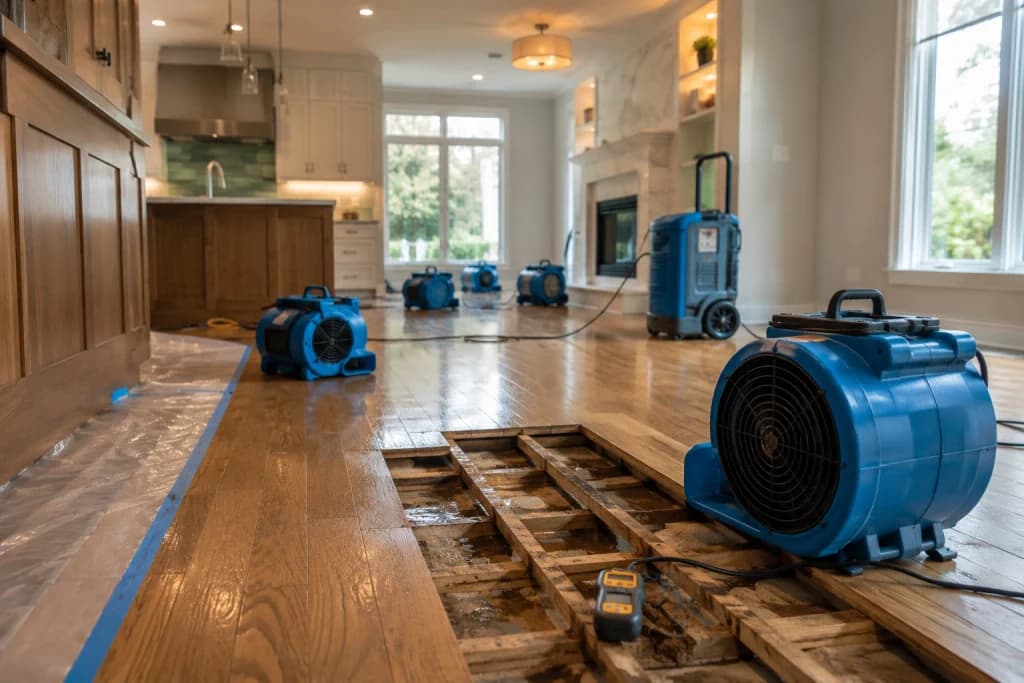
Professional water damage restoration involves more than drying visible water. Specialists use moisture detection equipment to locate hidden water, dry affected materials, and determine what can be restored or replaced.
The first step is a detailed inspection of the affected area. Professionals use moisture meters and thermal imaging equipment to detect water inside floors, walls, and other structural components.
This assessment helps identify the full extent of the damage and determines the most effective restoration plan.
After the inspection, commercial-grade air movers and dehumidifiers are used to remove moisture from the home. Drying continues until moisture levels return to an acceptable range.
This step is essential because trapped moisture can lead to mold growth, unpleasant odors, and additional structural damage even after the surface appears dry.
Once the area is completely dry, professionals evaluate which materials can be restored and which need replacement.
Minor hardwood floor water damage may only require sanding and refinishing, while severely warped flooring or swollen baseboards often need to be replaced. The goal is to restore both the appearance and structural integrity of the home.
In many cases, yes. The success of hardwood floor restoration depends on how much water was absorbed and how quickly the drying process began.
Materials are more likely to be saved when:
If the damage is extensive, replacing only the affected sections may be enough instead of installing entirely new flooring.
Many homeowners unintentionally increase the damage by delaying cleanup or relying only on surface drying.
Common mistakes include:
These mistakes can allow hidden moisture to remain inside the home, increasing repair costs and extending the restoration process.
Small spills can often be cleaned without professional help, but larger leaks or hidden moisture require specialized equipment and experience.
You should contact a restoration professional if:
Professional restoration helps prevent further damage while identifying issues that may not be visible during basic cleanup. If you’re dealing with water damage or need expert guidance, contact MBK Remodel to discuss the next steps for restoring your home.
Can water damaged hardwood floors be restored?
Yes. If drying begins quickly and the damage is limited, many hardwood floors can be restored without full replacement.
How long does water damage restoration take?
The timeline depends on the amount of water and the affected materials. Drying usually takes several days, while repairs may require additional time.
Do swollen baseboards always need replacement?
Not always. Slight swelling may improve after proper drying, but severely damaged or moldy baseboards typically need to be replaced.
Why is professional drying better than using household fans?
Professional drying equipment removes moisture from deep inside flooring, walls, and structural materials, helping prevent hidden water damage and mold growth that household fans cannot address.