Moving Bathroom Plumbing Cost: A Step-by-Step Budget Guide
11/9/2026
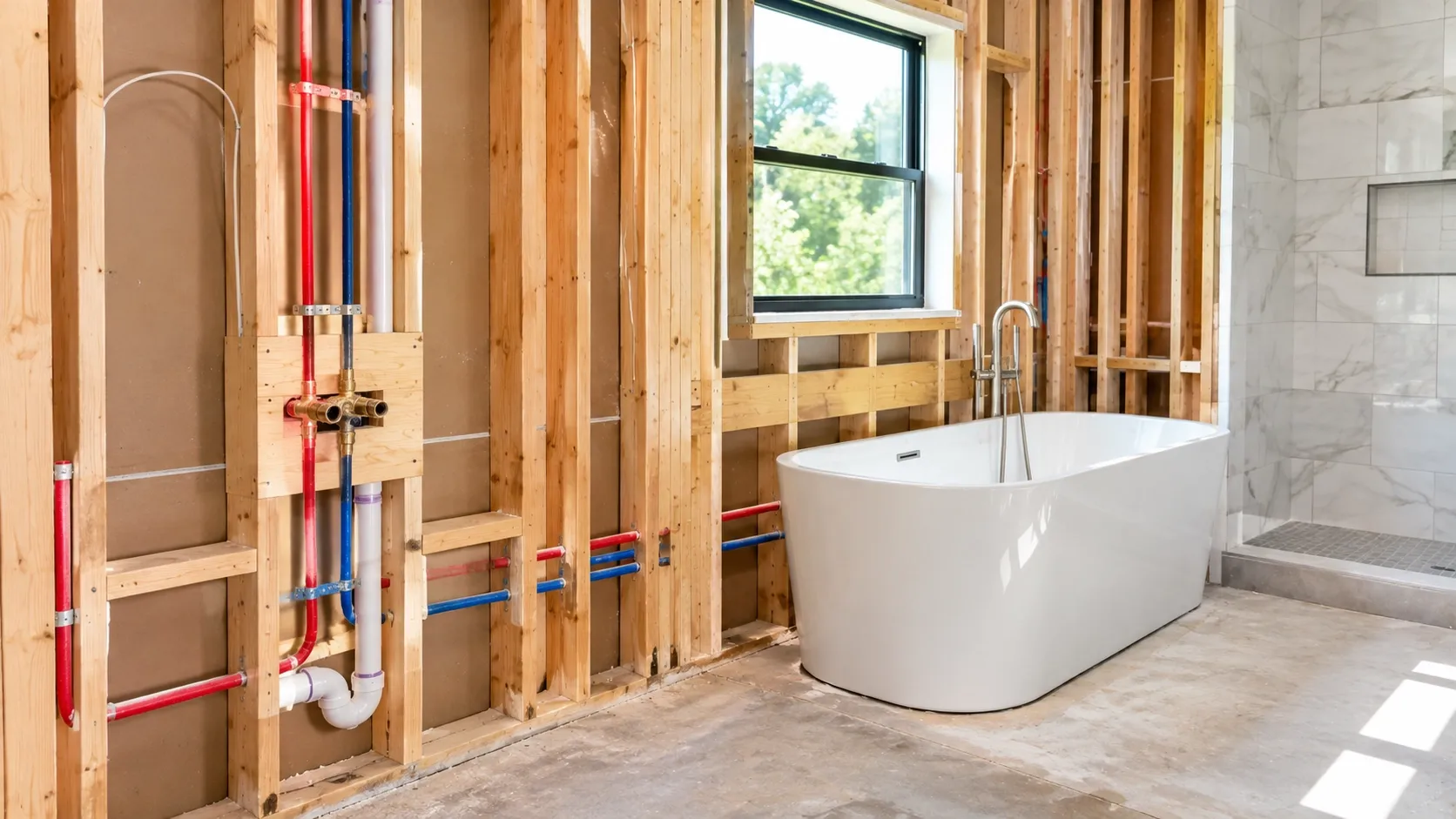
11/9/2026
Changing your bathroom layout can improve comfort, functionality, and the use of available space. However, relocating plumbing can add significant costs to a remodeling project, especially when drains must move beneath floors or through concrete.
The cost to move bathroom plumbing typically ranges from $1,000 to $6,000 for many remodeling projects. Moving a single fixture may cost approximately $500 to $3,500 or more, depending on distance, access, and plumbing complexity.
These estimates cover different project scopes. Plumbing relocation, demolition, structural work, and finish restoration are separate expenses. Understanding each stage helps you prepare a realistic budget.
Before relocating bathroom pipes, check which permits and inspections your local building department requires.
Permit requirements vary by location and project scope. Planning also helps identify potential problems before demolition begins. Skipping required permits can create compliance issues and complicate future property inspections or resale.
Plumbers need access to existing pipes before relocating them. This may require opening walls, removing flooring, or exposing the subfloor.
Homes with crawl spaces or accessible basements often require less demolition. Concrete slab foundations can be more challenging because relocating underground drains may require cutting and excavating the concrete. Concrete patching and flooring restoration may involve additional expenses.
New plumbing routes sometimes conflict with existing floor joists or wall studs.
Not every plumbing relocation requires framing changes. However, large drain pipes need sufficient space and an appropriate slope. Structural joists should never be cut or notched without checking applicable building-code requirements.
Rough-in plumbing is where the actual pipe relocation happens. It includes installing or extending the connections needed for your new fixture locations.
Costs depend heavily on the distance from existing connections. Moving a sink along the same wall is usually less expensive than moving it across the bathroom.
Toilets and showers can require more extensive drainage work. Moving fixtures may also require changes to vent piping, depending on the layout and local plumbing codes. A new vent through the roof is not always necessary.

After rough-in plumbing passes the required inspections, contractors can restore the opened areas.
Costs depend on how much of the bathroom was opened. Moving a sink may require limited repairs, while relocating a shower can involve rebuilding larger sections. Confirm whether drywall, waterproofing, tile, painting, and flooring are included in your contractor's estimate.
The final plumbing stage happens after the finished surfaces are ready.
The plumber also checks for leaks and verifies proper drainage. New fixture purchase costs are separate unless included in the estimate.
Unexpected problems can increase your renovation budget. Consider these possible expenses before starting work.
Opening older walls or floors may reveal hidden leaks, damaged wood, or moisture problems. Repairs can involve replacing affected materials and addressing the source of the damage.
Potential Additional Cost: $500–$2,500 or more.
Older homes may contain galvanized steel, deteriorated cast iron, or polybutylene piping. A plumber may recommend replacing damaged sections or upgrading existing pipes before connecting new plumbing.
Potential Additional Cost: $1,000–$4,000 or more.
Changing the bathroom layout may also affect outlets, switches, and vanity lighting. Electrical adjustments must follow applicable bathroom safety requirements.
Potential Additional Cost: $300–$800 for limited work.
Moving a shower or bathtub may require rebuilding parts of the shower base or replacing waterproofing membranes. The cost depends on the shower design and the amount of reconstruction required.

A few practical decisions can help control Bathroom renovation expenses.
DIY demolition may save labor costs, but check for hidden wiring, plumbing, structural components, and hazardous materials first.
Moving bathroom plumbing can improve your bathroom's layout, but the cost depends on more than the number of fixtures being relocated.
Drain routing, foundation type, plumbing access, and finish restoration all affect the final budget. A simple sink relocation may require limited work, while moving a toilet or shower across a concrete slab can involve extensive reconstruction.
Before demolition, request an itemized estimate from a qualified remodeling contractor. Confirm which costs cover plumbing relocation, permits, and restoration.
Careful planning helps prevent unexpected expenses and keeps your bathroom renovation within budget.
What Is the Most Expensive Bathroom Fixture to Move?
A toilet or bathtub can be among the most expensive fixtures to relocate. Toilets require larger drain connections and suitable drainage slopes, while bathtubs can involve extensive supply and drainage work. The final cost depends on the existing layout and relocation distance.
Can I Move Bathroom Plumbing Lines Myself to Save Money?
You may be able to handle limited cosmetic demolition if local rules allow it. However, relocating water supply lines, drains, and vents requires plumbing knowledge and may need permits. Incorrect installation can cause leaks, drainage problems, and failed inspections.
Does a Plumber's Quote Include Fixing the Walls and Floors?
Not necessarily. Many plumbing estimates cover pipe relocation, fixture connections, and testing. Drywall repairs, tile installation, waterproofing, painting, and flooring may require separate contractors. Confirm the complete scope before approving an estimate.
How Much Does It Cost to Move Plumbing in a House With a Concrete Slab?
Moving plumbing through a concrete slab can add approximately $1,000–$3,000 or more. Costs depend on trench length, concrete thickness, and pipe routing. The work may involve cutting the slab, relocating drain lines, and patching the concrete. Flooring restoration may cost extra.
