Waterproofing Your Walk-In Shower: Why Behind-the-Wall Quality Matters Most
8/15/2026
8/15/2026
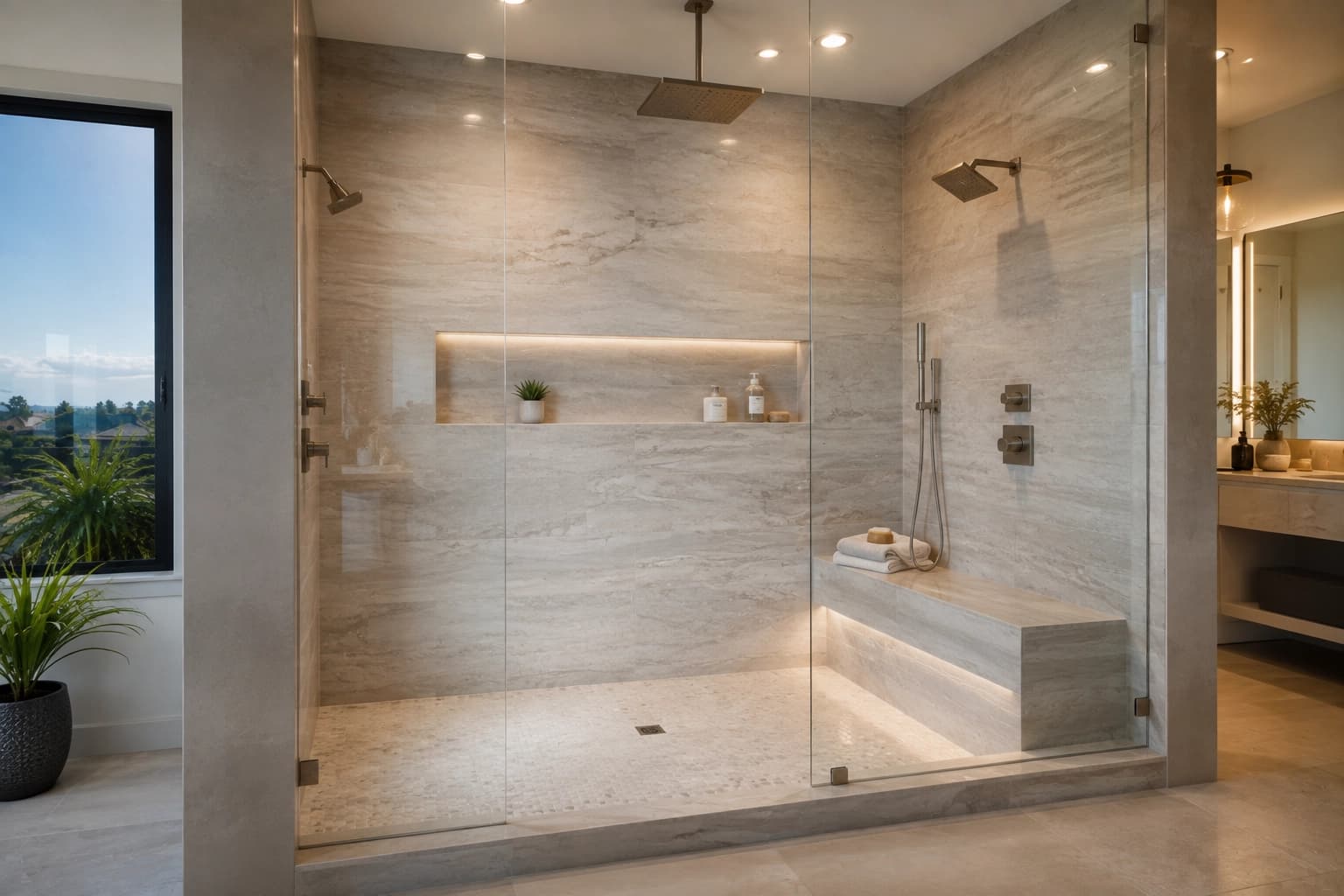
Walk-in shower waterproofing is essential because tile and grout alone cannot prevent moisture from reaching the structure behind your shower walls. A properly installed waterproofing system helps control water and protect the framing, walls, and surrounding areas from moisture damage.
The finished tile may be the most visible part of a shower, but much of its long-term performance depends on what sits underneath it. Waterproof membranes, backer boards, sealed joints, shower pans, and properly treated pipe penetrations all work together to manage moisture.
For San Diego homeowners planning a bathroom renovation, understanding these hidden components can help you make better decisions about materials, construction quality, and long-term durability.
Every shower is exposed to repeated water and humidity. During normal use, moisture can reach walls, corners, joints, niches, benches, and the area around the drain.
A waterproofing system creates a protective barrier beneath the finished surfaces. Instead of relying on tile and grout to stop moisture completely, the system helps control water before it can reach vulnerable building materials.
Waterproofing becomes especially important during a bathroom remodeling project, when walls and floors may already be open for construction. This is the ideal stage to address the shower structure before new tile and fixtures are installed.
Poor waterproofing can allow moisture to remain hidden for extended periods. Over time, that moisture may contribute to damaged framing, deteriorated materials, unpleasant odors, or repairs that require removing finished surfaces.
A properly waterproofed shower uses several components that work together. The exact products can vary, but the goal remains the same: control moisture and prevent it from reaching the structure.
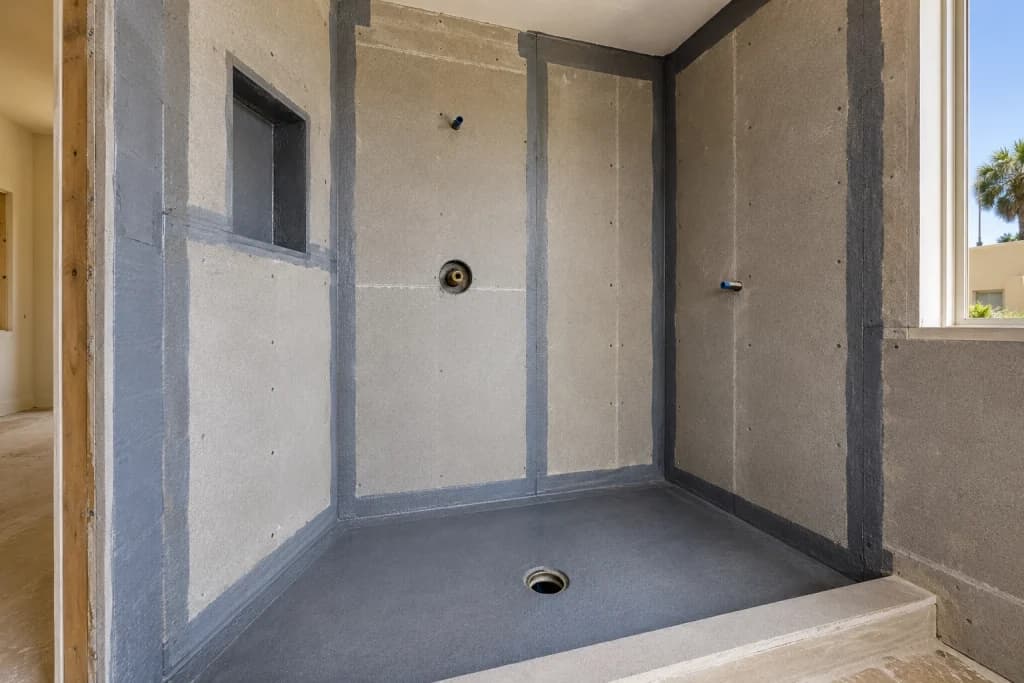
A shower waterproofing membrane forms a water-resistant layer beneath the finished shower surfaces. Depending on the system, the membrane may be installed as a sheet or applied as a liquid coating.
The membrane needs continuous coverage across areas exposed to water. Installation details matter because gaps, overlaps, or improperly treated transitions can create weak points.
A quality shower waterproofing membrane should always be installed according to the manufacturer’s requirements and integrated with the rest of the waterproofing system.
The material behind shower tile provides the foundation for the finished wall. Waterproof backer boards or other approved systems can help protect the wall assembly from moisture.
However, a water-resistant backer board does not automatically replace a complete shower waterproofing system. The entire assembly must work together.
This is particularly important during a new walk-in shower installation, when the wall assembly can be properly prepared before the finished surfaces are installed.
Waterproofing failures often occur at transitions rather than across large, uninterrupted surfaces. Corners, wall-to-floor joints, niches, benches, and plumbing openings all require appropriate treatment.
These details should be sealed using compatible materials and installation methods. A small opening around a pipe or poorly treated corner can undermine an otherwise well-installed waterproofing system.
The shower floor must direct water toward the drain while preventing moisture from entering the underlying structure. The shower pan and drain connection are therefore critical parts of the waterproofing assembly.
The floor, walls, curb, and drain should function as one continuous system. Proper slopes and carefully sealed connections help prevent standing water and uncontrolled moisture.
Waterproofing problems are not always obvious immediately after installation. Some develop gradually when water finds a path through a weak joint, penetration, or improperly treated surface.
Tile is a durable finish, but it should not be treated as the primary waterproofing barrier. Water can move through grout joints and other small pathways, making the waterproofing layer underneath essential.
If that layer is missing, damaged, or improperly installed, moisture may reach the wall structure behind the tile.
Corners experience movement and repeated exposure to water. They need flexible, compatible sealing methods that accommodate the shower’s construction.
Improperly treated corners can become vulnerable points where moisture moves behind the finished surface.
Built-in shower niches and benches add useful storage and comfort, but they also create additional corners and horizontal surfaces.
These features require careful waterproofing because water can collect on horizontal areas or enter through poorly treated transitions.
Every pipe, valve, showerhead connection, and drain creates an opening through the waterproofing layer. These penetrations must be sealed properly.
A shower can have excellent wall coverage and still experience problems if plumbing openings are not integrated correctly into the waterproofing system.
Some warning signs appear on the shower surface, while others become noticeable outside the shower area. None of these signs automatically proves waterproofing failure, but they deserve attention when they persist or worsen.
Cracked or loose tiles can result from several issues, including movement, installation problems, or moisture-related deterioration.
A single damaged tile does not necessarily mean the entire shower has failed. However, recurring tile problems can justify a closer inspection of the underlying assembly.
Grout or caulk that repeatedly becomes discolored may indicate persistent moisture, poor ventilation, staining, or another underlying issue.
Pay particular attention when discoloration returns after cleaning or appears alongside other moisture-related signs.
A musty odor that remains around a shower can indicate ongoing moisture. Persistent dampness around walls, floors, or nearby areas also deserves investigation.
Ventilation can affect bathroom moisture, so the source should be identified before assuming waterproofing is the only problem.
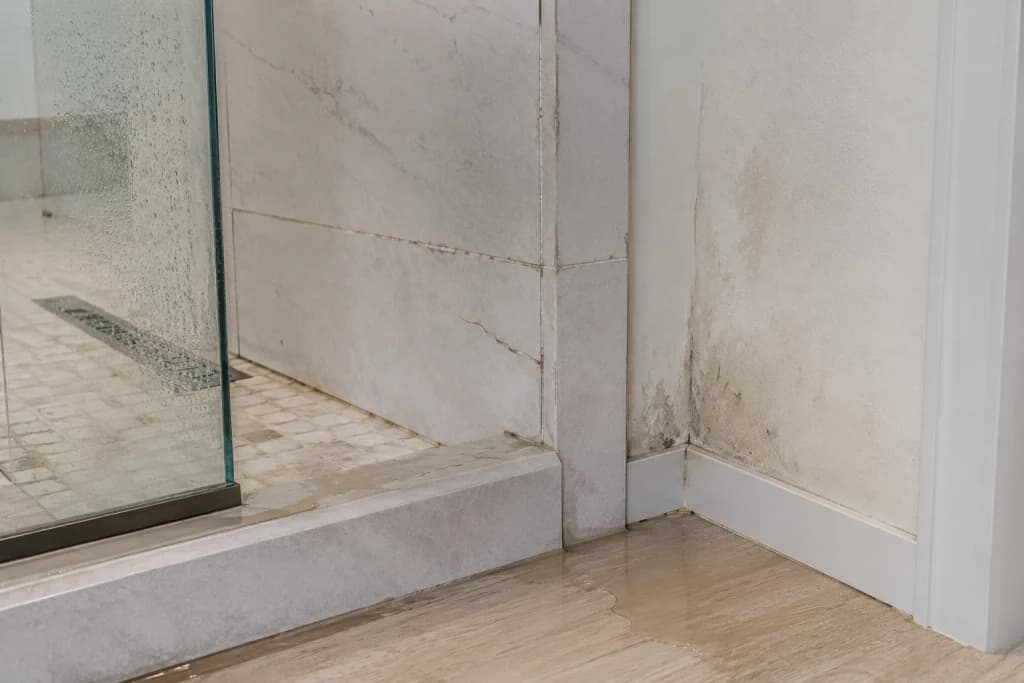
Water stains, damaged drywall, peeling finishes, or swelling materials outside the shower can indicate moisture movement.
When these signs appear near an adjoining wall or ceiling, the source should be investigated rather than simply covering the visible damage.
Tile and grout create the visible finished surface, but they are not a substitute for the waterproofing layer beneath them. Grout joints can allow some moisture to pass through, and every shower contains multiple joints, corners, and transitions.
The waterproofing system belongs behind the finished surface. Its purpose is to control moisture before it reaches framing and other moisture-sensitive materials.
This distinction is easy to overlook because a completed shower hides most of its protective construction. A beautiful surface does not necessarily reveal whether the underlying waterproofing was installed correctly.
Professional waterproof shower installation begins before tile goes on the walls. The substrate, waterproofing materials, transitions, and drainage system need to be coordinated as part of the overall construction.
The shower area should be properly framed and prepared before waterproofing begins. Walls and floors need appropriate surfaces for the selected system.
Any damaged or unsuitable materials should be addressed before the waterproofing layer is installed. This creates a stable foundation for the rest of the shower assembly.
The selected waterproofing system is installed across the required walls and floor areas. Sheet membranes, liquid-applied systems, and other approaches can be used depending on the project and manufacturer’s requirements.
Coverage should be continuous, with seams and transitions treated according to the system specifications.
Corners, niches, benches, curbs, drains, and plumbing penetrations require careful detailing. These areas connect different surfaces and therefore deserve additional attention.
Once the waterproofing is complete, the finished tile can be installed over the prepared assembly.
Waterproofing should be considered during the design stage rather than after the shower layout has already been finalized. Features such as niches, benches, curbs, linear drains, and shower doors can all influence construction details.
Homeowners should also consider how the shower will be used. A larger walk-in shower may have more wall area, multiple fixtures, or additional built-in features that require careful waterproofing coordination.
The overall renovation scope matters as well. If a homeowner is replacing an existing tub with a shower, the project can involve changes to plumbing, flooring, wall surfaces, drainage, and waterproofing. Understanding tub-to-shower conversion considerations can help with early planning.
Design choices should also be coordinated with the waterproofing system. Storage niches, seating, shower glass, tile layouts, and fixture locations should all be considered before construction begins.
For homeowners looking at the broader design possibilities, walk-in shower remodeling ideas can help identify features worth incorporating into the initial plan.
A walk-in shower should be protected from the inside out, not simply finished with attractive tile on the surface. The membrane, backer system, seams, corners, penetrations, shower pan, and drain all contribute to protecting the structure behind the walls.
Good waterproofing is largely hidden after construction is complete. That makes installation quality especially important because many problems may not become visible until moisture has already affected surrounding materials.
For homeowners planning a bathroom remodel, choosing the right waterproofing approach and coordinating it with the entire shower design can provide a stronger foundation for the finished space.
If you are planning a new shower or larger bathroom renovation, contact MBK Remodel to discuss the project and determine the appropriate construction approach.
Does a walk-in shower need waterproofing behind the tile?
Yes. Tile and grout should not be relied on as the primary waterproofing barrier. A properly designed shower needs a waterproofing system behind or beneath the finished surfaces to help protect the underlying structure.
Can water get behind shower tiles?
Yes. Water can move through grout joints, seams, cracks, and other small pathways. That is why waterproofing behind shower tile is important for managing moisture before it reaches the wall structure.
How long should a properly waterproofed shower last?
A properly constructed shower can provide many years of service, but there is no single lifespan that applies to every waterproofing system. Product quality, installation, maintenance, moisture exposure, and the surrounding structure all influence durability.
How can I tell if my shower waterproofing has failed?
Possible warning signs include recurring moisture, musty odors, damaged drywall outside the shower, persistent staining, loose tiles, or deterioration around shower transitions. These symptoms can have other causes, so professional evaluation may be needed to identify the source.