Asbestos in Popcorn Ceilings: Safe Removal During a Home Remodel
9/14/2026

9/14/2026
If you suspect asbestos in popcorn ceilings, do not scrape, sand, drill, or remove the material yourself. The safest approach is to have suspected material assessed and, when necessary, tested by a qualified asbestos professional before remodeling work begins.
Popcorn ceilings were widely used in older homes, and some ceiling textures can contain asbestos. You cannot reliably identify asbestos by appearance alone. For homeowners planning a renovation, knowing what is present before disturbing ceilings can help prevent unnecessary exposure and keep the remodeling project on the right track.
Asbestos was used in a wide range of building products because of its durability and resistance to heat. Some older ceiling textures and surfacing materials were manufactured with asbestos, although not every popcorn or textured ceiling contains it.
The age of a home can provide a reason to investigate, but it does not prove that asbestos is present. A ceiling’s appearance, color, or texture is not enough to confirm its contents.
The concern becomes greater when remodeling will disturb the ceiling. Cutting openings for lighting, removing sections, scraping texture, installing new electrical components, or performing other work can potentially release fibers if the material contains asbestos.
The EPA recommends having suspect materials sampled by a properly trained and accredited asbestos professional when they are damaged or when planned renovation could disturb them.
For homeowners already dealing with broader property damage, asbestos may also be one consideration alongside other restoration concerns. A professional home restoration service can help determine which aspects of the property require attention before remodeling proceeds.
You cannot determine whether a popcorn ceiling contains asbestos simply by looking at it. Texture, color, age, and construction style can provide clues about a material’s history, but none can confirm its asbestos content.
The only reliable way to establish whether a suspect material contains asbestos is through appropriate sampling and laboratory analysis. The EPA recommends that sampling be performed by a properly trained and accredited asbestos professional rather than by the homeowner.
Testing becomes particularly relevant when a remodeling project will disturb the ceiling. If the ceiling is in good condition and will remain untouched, there may be no reason to disturb it simply to find out whether asbestos is present.
This distinction is important because unnecessary disturbance can create a problem where none previously existed. If testing is appropriate, it should happen before demolition, electrical work, ceiling modifications, or other construction activities begin.
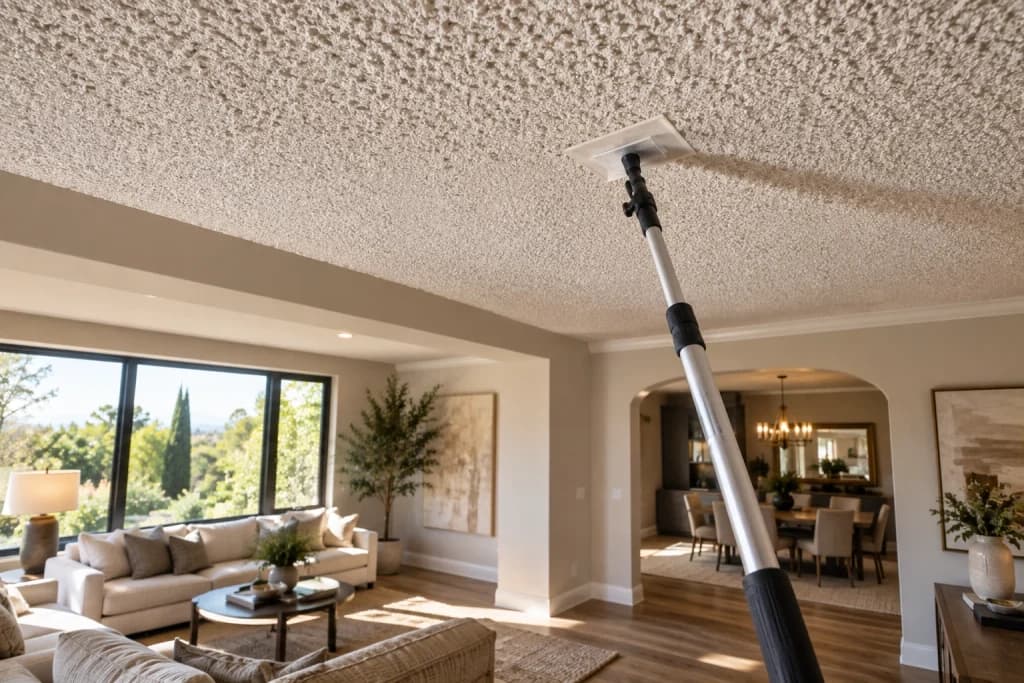
Finding asbestos in a home does not automatically mean the ceiling must be removed. Asbestos-containing material that is intact and left undisturbed may be managed in place. The appropriate response depends on the material’s condition and the planned work.
Do not scrape, sand, drill, cut, or otherwise disturb a suspected asbestos popcorn ceiling while deciding what to do next. Avoid DIY sampling as well. The EPA notes that improper sampling can increase the risk of releasing asbestos fibers.
If the ceiling is damaged, crumbling, or otherwise deteriorating, limit access to the affected area and arrange for professional assessment. Do not sweep or use ordinary household cleaning methods on potentially contaminated debris.
A qualified asbestos professional can evaluate the material, determine whether sampling is appropriate, and help identify the safest approach for the planned renovation.
Testing should be performed through an appropriate laboratory. If asbestos is confirmed, the professional can help determine whether the material should remain in place, be encapsulated or repaired, or be removed as part of the remodeling plan.
For a San Diego home remodel, it is also important to understand which California requirements apply to the planned asbestos-related work. Cal/OSHA regulates asbestos exposure during construction activities, including renovation and removal work.
If removal is necessary, asbestos-related work should be completed before other construction activities that could disturb the affected ceiling. This can prevent new finishes, fixtures, flooring, cabinetry, or other remodeled areas from being exposed to unnecessary contamination.
The remodeling team and asbestos professionals should coordinate the sequence of work. Depending on the project, this may involve isolating the work area, controlling access, removing affected materials, performing appropriate cleanup, and confirming that the area is ready for subsequent construction.
California also has registration and certification requirements that may apply to certain asbestos-related work. Requirements can depend on the material, quantity, and type of work involved.
Asbestos popcorn ceiling removal is not the same as ordinary popcorn ceiling removal. When asbestos is confirmed or appropriately presumed, the work must be planned around controlling the release and spread of fibers.
Before removal begins, the work area needs to be controlled so that debris and potential airborne fibers do not spread into occupied portions of the home.
The exact controls depend on the project, but professional asbestos work can involve restricting access, protecting surfaces, establishing containment, and using appropriate protective equipment and procedures.
Homeowners should not assume that covering furniture with plastic or wearing a basic dust mask makes DIY removal safe. Proper asbestos work requires specialized procedures and training.
Removal methods depend on the specific material and project conditions. Qualified asbestos professionals use procedures designed to minimize fiber release while removing, packaging, transporting, and disposing of asbestos-containing material appropriately.
This is especially important when the ceiling texture must be removed before a larger renovation. Attempting to scrape an asbestos popcorn ceiling as a weekend project can create uncontrolled dust and expose other areas of the home.
California’s construction asbestos regulations apply to work involving the removal or disturbance of asbestos-containing materials.
Removal is not finished simply because the visible ceiling texture is gone. The work area must be cleaned using appropriate asbestos-control procedures so that remaining dust and debris are properly addressed.
The project should not move directly into drywall finishing, painting, electrical installation, or other remodeling activities until the asbestos-related work has been appropriately completed.
This sequencing helps separate hazardous-material work from the clean construction phase and gives the remodeling team a safer surface on which to continue.
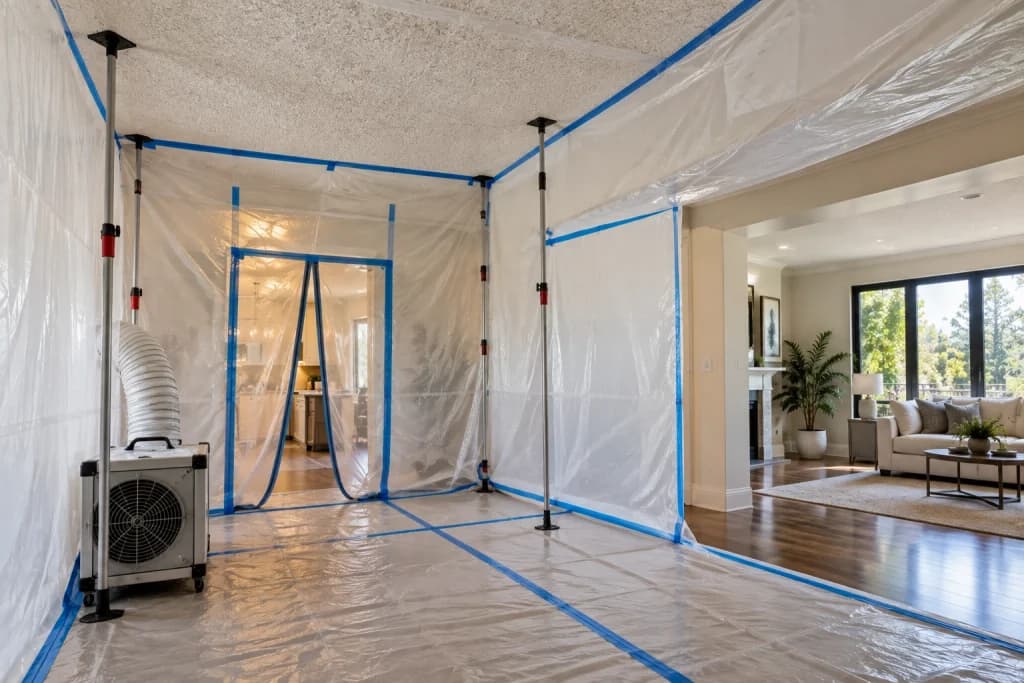
An asbestos-containing popcorn ceiling can affect more than a ceiling-removal decision. It can influence how the entire remodeling project is planned.
For example, a kitchen renovation may require new recessed lighting, electrical wiring, ventilation, or ceiling repairs. A bathroom remodel may require changes to lighting, exhaust ventilation, or other ceiling-mounted components. Each activity should be reviewed to determine whether it could disturb the existing material.
If ceiling damage is connected to a leak or another property problem, the underlying source should also be addressed. For example, water damage restoration may be necessary when moisture has affected other portions of the property.
The same principle applies when remodeling uncovers other hidden problems, such as moisture or mold behind existing finishes. These conditions should be evaluated before new materials are installed over the affected area.
Professional restoration services may be appropriate when asbestos concerns occur alongside property damage, deterioration, or a larger repair project.
Examples can include a damaged ceiling following a water event, extensive deterioration of existing finishes, or a remodeling project where several older building materials may be disturbed.
The key is to separate the roles involved. Asbestos inspection, testing, and abatement should be handled by appropriately qualified professionals. A remodeling contractor can then coordinate the broader renovation around the completed asbestos-related work when that falls within the project’s scope.
Before hiring anyone for asbestos-related work, homeowners should verify applicable qualifications, registrations, and experience. Cal/OSHA provides information about asbestos contractor registration and certified professionals in California.
Asbestos in popcorn ceilings should be treated as a safety and planning issue, not simply a cosmetic remodeling problem. Because asbestos cannot be identified reliably by sight, suspected ceiling material should be professionally evaluated before renovation work that could disturb it.
If asbestos is confirmed, leaving the material undisturbed may sometimes be appropriate. When remodeling requires disturbance or the material is significantly damaged, qualified asbestos professionals should determine the appropriate abatement or management approach before general construction continues.
Careful planning can help homeowners move forward with kitchen, bathroom, ceiling, and broader remodeling improvements without treating a potentially hazardous material like ordinary construction debris. For help coordinating a larger renovation in San Diego, contact MBK Remodel to discuss the project’s scope and next steps.
Can you tell if a popcorn ceiling has asbestos by looking at it?
No. The appearance, texture, and age of a popcorn ceiling cannot confirm whether it contains asbestos. A qualified professional should collect a sample when testing is appropriate, with the material analyzed by a qualified laboratory.
Should I remove an asbestos popcorn ceiling before remodeling?
Not always. If the material is intact and will not be disturbed, leaving it in place may be appropriate. If planned remodeling will disturb the ceiling, a qualified asbestos professional should determine whether removal or another control method is necessary before construction begins.
Is it safe to paint over an asbestos popcorn ceiling?
Painting may avoid the disturbance associated with removal, but whether it is appropriate depends on the material’s condition and the specific project. Do not scrape, sand, or otherwise prepare a suspected asbestos ceiling using methods that could release fibers. Have the material assessed before deciding how to finish it.
Who should handle asbestos-containing ceiling materials?
Asbestos inspection, sampling, and abatement should be handled by appropriately trained and qualified asbestos professionals. In California, certain asbestos-related projects are subject to Cal/OSHA registration and certification requirements, depending on the work involved.