Kitchen Remodel Cost in San Diego: What You Should Budget
12/11/2025
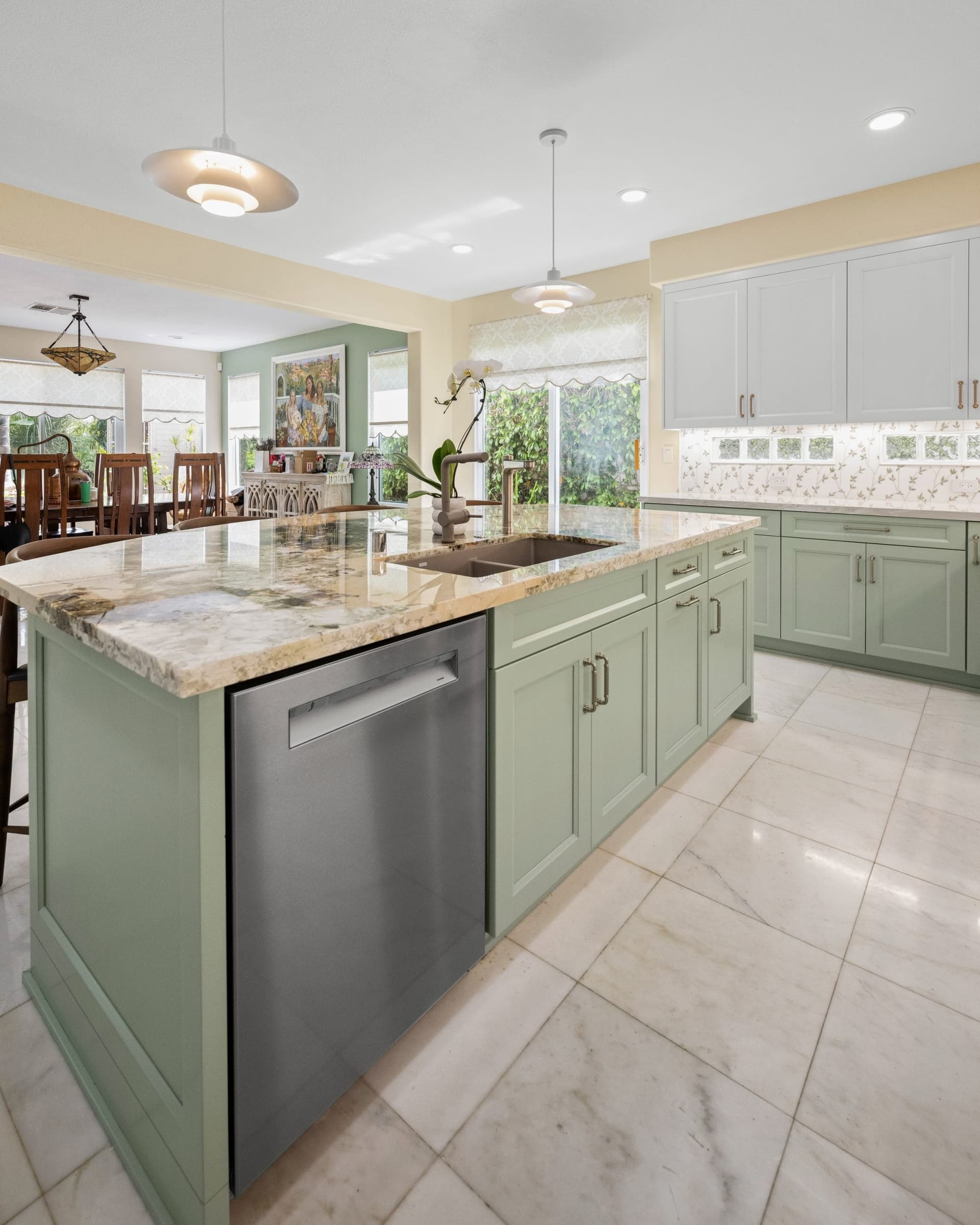
12/11/2025
For a San Diego homeowner planning a kitchen remodel, total project cost typically falls into three bands: $12,000 to $25,000 for a small cosmetic refresh or compact kitchen update; $25,000 to $40,000+ for a mid-range pull-and-replace in a full-size kitchen; and—based on industry cost surveys for the San Diego metropolitan area—$60,000 to $100,000+ for a full-gut luxury renovation with custom everything, layout reconfiguration, and premium appliances.
Pricing current as of Q3 2026.
Kitchen remodel costs in San Diego depend on the size of the space, materials selected, and the level of work required.
Most San Diego kitchen remodels fit into one of three scope tiers. A cosmetic refresh keeps the existing layout and updates surfaces and fixtures. A mid-range pull-and-replace replaces cabinets, counters, appliances, and flooring without moving walls. A full-gut luxury renovation takes the space to studs and reconfigures the layout with custom finishes.
| Remodel Tier | Typical Scope | Cost Range (San Diego) | Pricing Source |
|---|---|---|---|
| Small / Cosmetic Refresh | Paint, cabinet refacing or stock replacements, laminate or quartz counters, standard appliances, new lighting, no layout or plumbing changes. Ideal for kitchens 60–120 sq ft. | $12,000 – $25,000 | MBK published pricing |
| Mid-Range Pull-and-Replace | Semi-custom or full custom cabinetry, quartz or solid-surface counters, upgraded appliance package, new flooring, under-cabinet lighting, plumbing and electrical brought to current code. Layout stays the same; no wall removal. | $25,000 – $40,000+ | MBK published pricing |
| Full-Gut Luxury Remodel | Custom cabinetry throughout, premium stone surfaces, luxury appliances, layout reconfiguration, structural wall removal, plumbing and gas-line relocation, custom lighting design, engineered drawings. Entire space taken to studs and rebuilt. | $60,000 – $100,000+ | Industry cost surveys for San Diego metro area |
MBK Remodel (CSLB #1085370, serving San Diego since 2010) publishes transparent pricing wherever possible. The $12,000 to $40,000+ figures draw from our published project data. Full-gut luxury ranges come from industry cost benchmarks—every project at that tier is too custom for a one-size-fits-all quote.
Several factors create most of the spread between a $25,000 and a $100,000 project:
Kitchen remodel costs vary based on materials, layout, and the work required to complete the project.
Larger kitchens require more materials and installation time. Smaller kitchens may still cost more if layouts need adjustment. Kitchen shape affects workflow and labor complexity. Square footage directly sets the floor for material and labor: a compact 80-square-foot galley kitchen in Point Loma uses fewer cabinets and less flooring than a 250-square-foot open-concept kitchen in Rancho Santa Fe. Per-square-foot costs in San Diego run $200 to $450 based on MBK published data—an extra 50 square feet can shift the budget by $10,000 or more before any upgrade decisions. Layout complexity compounds this: a single-wall kitchen is faster to build than a U-shaped design with peninsula and island.
Upgraded surfaces increase the total cost. Cabinets, countertops, and flooring have the biggest impact. Durable finishes provide long-term value and reduce future repairs. Cabinetry and countertops together consume more budget than any other line item. MBK’s published cabinet pricing runs $10,000 to $40,000 depending on stock, semi-custom, or fully custom construction; countertop materials span from laminate through quartz and porcelain to natural stone slabs. Flooring, backsplash tile, and hardware finish all layer on top.
Labour rates in San Diego reflect the demand for skilled professionals. Permits depend on electrical, plumbing, or structural changes. Code-compliant work ensures safe installation and long-term performance. San Diego skilled-trade labor rates sit above the national average. MBK’s published labor range for a small-to-mid kitchen remodel is $5,000 to $15,000; for larger projects with structural work, that number climbs. City of San Diego Development Services Department (DSD) permits are required whenever electrical, plumbing, or structural changes are involved, adding both fees and inspection time.
Wall removal increases engineering and labour expenses. Load-bearing walls require beams or reinforcement. Layout adjustments improve function but raise overall costs. Removing a non-load-bearing wall adds framing, drywall, flooring patch, and finish work. Removing a load-bearing wall requires an engineered beam, possible foundation reinforcement, and a structural permit—pushing the project toward the full-gut tier. Budget for engineering and DSD structural review any time a wall comes down.
A kitchen remodel budget is divided across several main categories. These areas influence both design and long-term usefulness.
Usually the largest portion of the remodel budget. Options range from stock to custom cabinetry. Storage upgrades help improve organization and daily function. MBK’s published range for kitchen cabinets spans $10,000 to $40,000 depending on construction method, wood species, finish, soft-close hardware, and specialty storage inserts. Custom cabinets built to fit your layout cost more than stock or semi-custom, but they also deliver the most efficient use of space.
Countertop prices vary by material and thickness. Quartz and porcelain offer strong durability. Backsplashes add style with a smaller budget commitment. Based on MBK published data, countertops and backsplash together typically run $2,000 to $7,000. Material grade—laminate, quartz, porcelain, granite, or marble—slab size and seam count, edge profile, and full-height backsplash versus a standard 4-inch backsplash all drive the final number.
Modern appliances improve efficiency and performance. Upgraded fixtures enhance water flow and daily use. Moving plumbing lines increases installation cost. Appliances and fixtures typically fall in the $2,000 to $8,000 range, covering the refrigerator, range or cooktop, dishwasher, microwave, ventilation hood, sink, faucet, and garbage disposal. Energy-efficient and pro-style models push toward the upper bound. Relocating a single plumbing fixture adds $1,500 to $6,500+ depending on whether your home sits on a concrete slab or a raised foundation, and gas-line relocation runs $1,200 to $3,500.
Flooring costs depend on material and room size. Lighting increases visibility and improves ambiance. Layered lighting helps create depth and balance. Flooring and lighting together typically cost $1,500 to $5,000, including flooring material and installation—tile, vinyl plank, or engineered wood—plus recessed cans, under-cabinet LED strips, pendant fixtures, and dimmer switches.
Every kitchen remodel distributes cost across seven major categories. The table below uses MBK published component pricing to show realistic San Diego ranges. Percentages shift by project tier—a small refresh spends proportionally more on labor because the base mobilization cost is fixed, while a luxury remodel tilts heavily toward cabinetry and surfaces.
| Budget Category | Typical San Diego Cost Range | Approx. Share of Total | What It Covers |
|---|---|---|---|
| Cabinetry & Storage | $10,000 – $40,000 | 30–40% | Stock, semi-custom, or fully custom cabinets; pantry pull-outs; soft-close hardware; crown molding; island cabinetry. |
| Countertops & Backsplash | $2,000 – $7,000 | 12–18% | Material and fabrication for countertops (laminate, quartz, porcelain, natural stone) plus backsplash tile, grout, and installation. |
| Appliances & Fixtures | $2,000 – $8,000 | 10–15% | Refrigerator, range/cooktop, dishwasher, microwave, ventilation hood, sink, faucet, garbage disposal. Energy-efficient and pro-style models push toward the upper bound. |
| Flooring & Lighting | $1,500 – $5,000 | 8–12% | Flooring material and install (tile, vinyl plank, engineered wood); recessed cans, under-cabinet LED strips, pendant fixtures, dimmer switches. |
| Plumbing & Electrical | $1,500 – $6,500+ | 8–15% | Fixture relocation (published range per fixture); code-required GFCI/AFCI outlet upgrades; dedicated appliance circuits; rough-in and finish plumbing for sink, dishwasher, and gas line. |
| General Labor & Construction | $5,000 – $15,000 | 15–25% | Demolition, drywall, framing, trim carpentry, painting, debris removal, project management. Published range covers small-to-mid kitchens; full-gut projects run higher. |
| Permits, Design & Engineering | Varies by scope | 3–8% | City of San Diego DSD permit fees, structural engineering for wall removal, design drawings, and third-party inspections. Required for any project touching electrical, plumbing, or structure. |
Several smaller costs can affect your overall kitchen remodel budget. These items are easy to overlook but important for planning.
Design plans help guide layout, materials, and function. Engineering may be required for structural changes. These fees support safe and accurate construction. A full-gut renovation with wall removal requires engineered drawings and DSD structural review, which add cost but are essential for compliance and safety.
Older homes may need upgraded wiring or outlets. Plumbing adjustments increase cost if locations change. New fixtures or appliances sometimes require rerouting lines. Moving a sink, dishwasher, or gas range even a few feet is one of the costliest decisions in a kitchen remodel. MBK’s published data shows relocating a single plumbing fixture adds $1,500 to $6,500+ depending on whether your home sits on a concrete slab or a raised foundation. Gas-line relocation runs $1,200 to $3,500, and upgrading from a standard 1/2-inch gas line to the 3/4-inch or 1-inch line required by pro-style ranges means running new pipe back to the meter. Homes on slabs—common in Carmel Valley and Scripps Ranch—face the highest costs because crews must trench through concrete. Older homes in Mission Hills or coastal La Jolla with raised crawlspaces typically see costs at the lower end.
Hidden water damage increases repair time. Mold or old pipes may need replacement. Structural surprises can impact the final cost. San Diego homes, especially pre-1980 builds, frequently reveal surprises behind drywall: outdated wiring, corroded pipes, water damage, or subfloor issues. A contingency fund prevents a single discovery from derailing the project.
Budgeting helps you balance goals, material choices, and long-term value. Here are some key points to budget correctly for a Kitchen Remodel.
Decide the level of change you want before selecting materials. Compare price ranges for cabinets, counters, and appliances. Align project goals with what comfortably fits your budget. Start with the scope, not the finishes: decide whether you are doing a cosmetic refresh, pull-and-replace, or full-gut renovation before visiting a showroom.
Identify essential updates such as cabinets or layout changes. Consider optional upgrades like lighting or decorative accents. Balancing both helps achieve better results without overspending. Prioritize cabinetry: cabinets are the most-used kitchen element and the most expensive to replace later. Allocate the strongest portion of your budget here. Save on backsplash tile or lighting fixtures—items easier to upgrade later.
Set aside a small portion of your budget for unexpected issues. Contingency helps reduce stress if repairs or upgrades arise. This step supports smoother decision making throughout the project. We recommend setting aside 15–20% of the total budget as a contingency. San Diego’s older coastal housing stock often needs code-compliance upgrades once walls are opened, and these routinely push local remodels above national averages.
Saving money during a kitchen remodel is possible with the right choices.
Selecting materials that balance cost and performance helps keep the remodel within budget. Durable options such as mid-range flooring, practical countertop surfaces, and simple cabinet finishes provide long-lasting value without the higher price of premium selections.
Maintaining the current kitchen layout reduces the need for plumbing or electrical changes, which are often significant cost drivers. When the existing layout already supports good workflow, keeping it intact streamlines the remodel and lowers labor and engineering costs. Maintaining existing sink, range, and dishwasher locations avoids plumbing and gas-line relocation that can add $1,500 to $6,500+ per fixture. This approach allows more of the budget to go toward finishes and upgrades that improve daily use.
Blending premium features with more affordable selections offers a balanced design that looks polished without exceeding budget limits. Using high quality materials in focal areas such as countertops or lighting while choosing simpler options for secondary elements creates a cohesive look.
Working with a professional remodeler helps ensure the project is completed safely, efficiently, and in line with San Diego building standards.
A licensed contractor manages the remodel with clear planning and attention to detail. Their training ensures that materials are installed correctly and that each part of the project meets professional standards. This level of oversight helps deliver reliable results and a smoother remodeling experience.
Quality workmanship and proper permitting are essential for any kitchen remodel involving electrical, plumbing, or structural updates. A contractor handles these requirements accurately, preventing compliance issues and potential delays. Any kitchen remodel touching electrical wiring, plumbing pipes, or structural walls legally requires a permit from the City of San Diego Development Services Department. Cosmetic-only projects—painting, replacing cabinet doors, swapping a faucet or light fixture like-for-like—do not trigger the requirement. MBK handles the entire DSD process—application, plan submission, rough-in and final inspections, and close-out—so you never navigate city bureaucracy alone. Plan for at least one to three weeks of permitting and inspection time on top of your construction schedule.
Professional guidance helps prevent errors that may lead to expensive repairs later. Mistakes in installation, structural adjustments, or material selection can create long-term problems. Having an experienced remodeler oversee the project reduces these risks and supports a successful outcome.
Planning the kitchen remodel cost in San Diego becomes easier when you understand how materials, layout decisions, and labour influence your budget. A remodel can improve daily function, elevate the look of your home, and increase long-term value when designed with clear goals in mind. By choosing materials thoughtfully and preparing a realistic budget, you can create a kitchen that feels modern, efficient, and comfortable for years to come.
Most kitchen remodels fall into three bands: $12,000 to $25,000 for a small cosmetic refresh, $25,000 to $40,000+ for a mid-range pull-and-replace, and—based on industry cost surveys for the San Diego metropolitan area—$60,000 to $100,000+ for a full-gut luxury renovation. The exact cost depends on size, materials, and structural scope.
Cabinetry is the largest single line item, typically 30 to 40 percent of the total budget. MBK’s published cabinet range spans $10,000 to $40,000 depending on construction method, finish, and hardware. Countertops are second; premium natural stone or full-height backsplashes can rival cabinet spending. Appliances spike quickly with pro-style ranges and column refrigeration.
Yes, it is possible to remodel within a limited budget by choosing affordable materials and keeping the existing layout. Selecting mid-range finishes, using simpler designs, and making thoughtful upgrades can still create a fresh and modern space. MBK’s published data shows small kitchen remodels starting at $12,000, covering cosmetic updates and basic material swaps. Avoid moving plumbing or electrical to stay at the bottom of the range.
The timeline depends on the remodel’s scope. A small cosmetic refresh finishes in about three to five weeks. A mid-range pull-and-replace takes six to ten weeks. A full-gut luxury remodel with layout changes, wall removal, and plumbing relocation runs ten to sixteen weeks or longer. Add one to three weeks for City of San Diego DSD permitting. Custom cabinets and imported stone have the longest lead times; order these immediately after design finalization.
Cosmetic-only updates—painting, replacing cabinet doors, swapping a faucet or light fixture like-for-like—do not require a permit. Any work touching electrical, plumbing, or structural walls requires a permit from the City of San Diego Development Services Department. Adding an outlet, moving a sink, running a gas line, removing a wall, or installing a dedicated appliance circuit all trigger the requirement. MBK Remodel pulls all required permits and manages inspections for every project.
A well-executed kitchen remodel in San Diego typically recovers a strong portion of its cost at resale, though the exact return depends on neighborhood, scope, and finish quality. Mid-range remodels deliver the best return because buyers expect an updated kitchen. Luxury remodels in high-value neighborhoods add value by meeting buyer expectations, but the return percentage may be lower because the absolute spend is higher. Align your remodel tier with comparable homes in your neighborhood rather than trying to build the most expensive kitchen on the block.
Compare bids line by line, not by bottom-line number. One contractor may quote stock cabinets while another prices semi-custom; one may include permit fees while another leaves them as owner responsibility. Ask whether each bid includes DSD permit costs, debris removal, appliance installation, and a contingency allowance. Verify the contractor holds a current California CSLB license—MBK’s is #1085370—and ask for recent San Diego kitchen remodel references. The lowest bid is rarely the best value.