Radiant Heated Flooring in Bathrooms: Is It Worth It in San Diego?
10/9/2026
10/9/2026
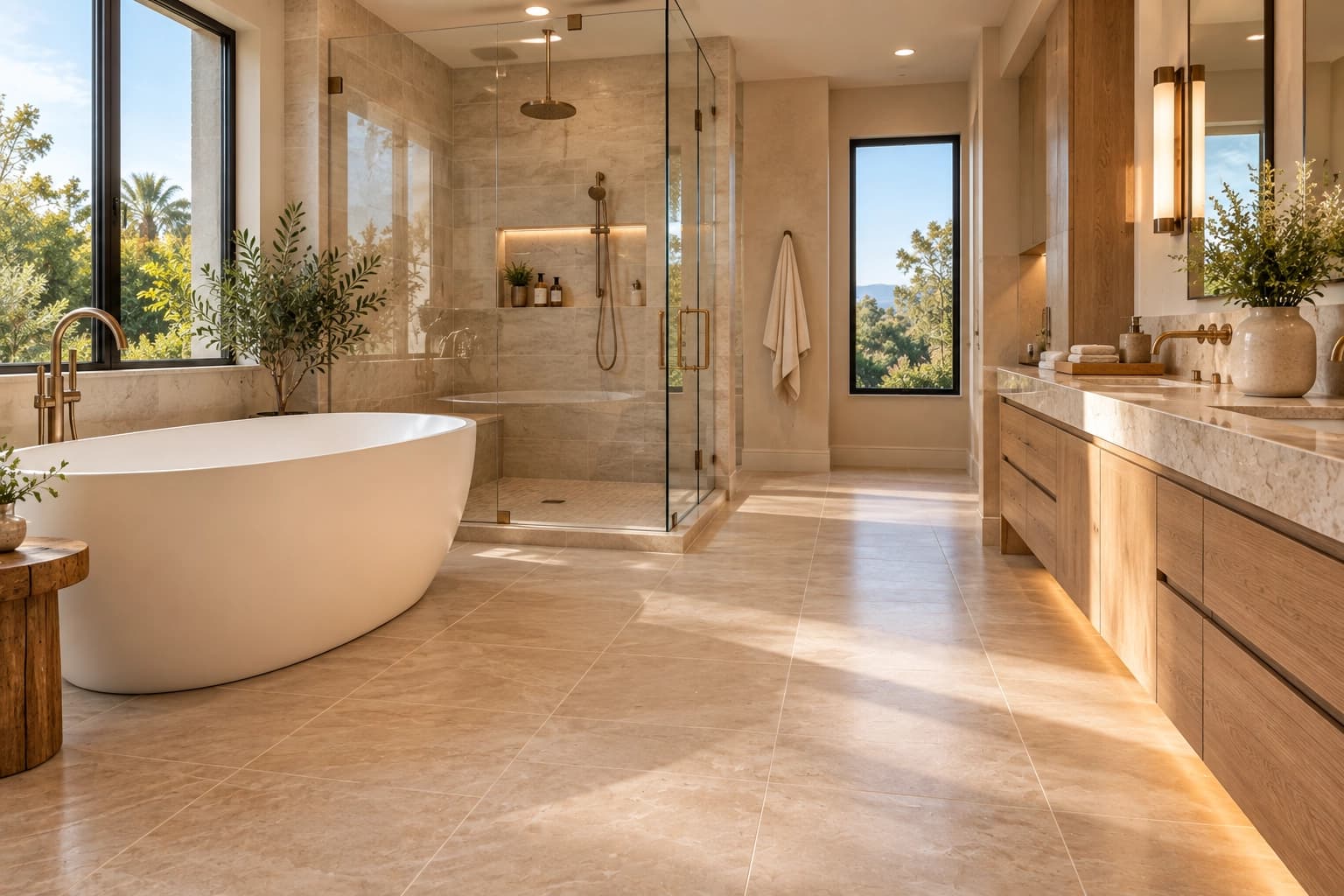
Radiant heated flooring in bathrooms can be a worthwhile comfort upgrade in San Diego, especially when installed during a bathroom remodel. It warms the floor from below and can make tile or stone more comfortable underfoot.
San Diego’s mild climate means heated floors are not a necessity for most homes. However, bathrooms can still have cool floors during winter mornings, and radiant heating provides targeted warmth without relying on whole-room heating. This guide explains how bathroom floor heating works, its benefits, compatible flooring options, typical costs, and what to consider before adding it to your remodel.
Radiant heated bathroom flooring is an underfloor heating system that warms the finished floor from below. Instead of blowing warm air into the room, the system transfers heat through the floor surface.
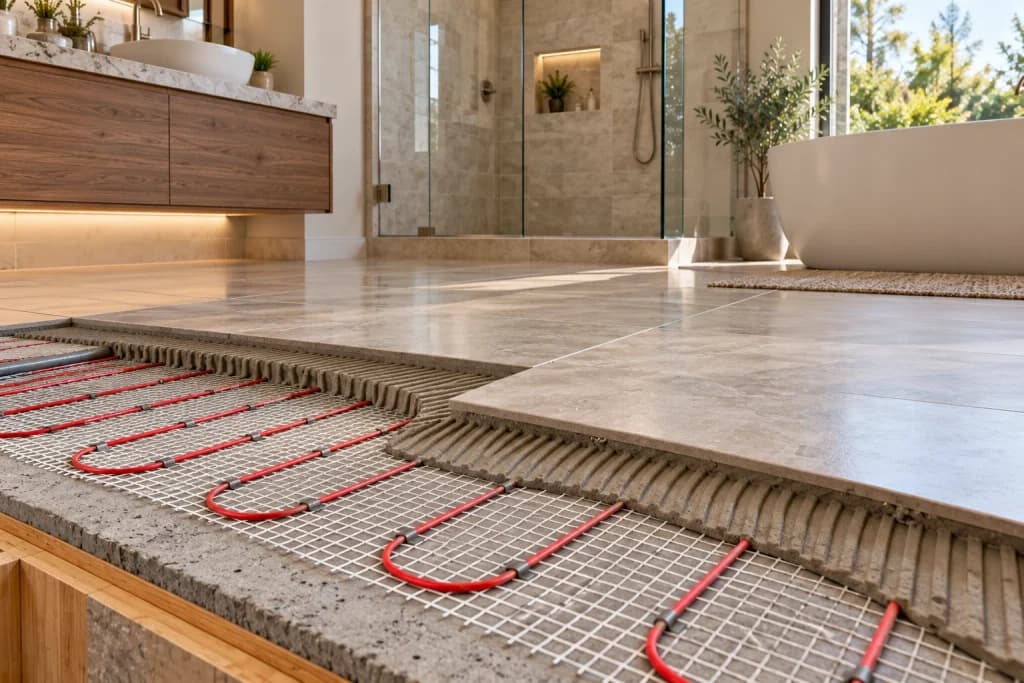
Electric systems use heating cables or mats installed beneath the finished flooring. Hydronic systems use water-filled tubing to transfer heat through the floor.
The finished floor can then provide a steady source of warmth across the heated area. This makes radiant floor heating different from a portable heater or forced-air system because the heat comes directly from the floor.
For bathroom remodeling projects, radiant heating is commonly considered alongside flooring, waterproofing, electrical work, and the overall room layout. Planning these components together can help avoid unnecessary changes later.
Radiant floor heating places the heating component beneath the finished flooring. When activated, it transfers heat upward through the flooring material and into the bathroom.
Electric radiant floor heating uses resistance cables or mats. These components connect to the home’s electrical system and are controlled through a thermostat, often with a floor sensor.
Hydronic radiant floor heating uses tubing beneath the floor. Warm water circulates through the tubing and transfers heat upward. Hydronic systems can be useful when radiant heating is part of a larger home heating design, but they involve more components and planning than a typical electric bathroom system.
For a single bathroom, electric systems are often simpler to integrate because they do not require water tubing or a separate boiler. The appropriate system depends on the home’s existing infrastructure, the size of the heated area, and the scope of the remodel.
Radiant heated floors are primarily a comfort feature, but they can also affect how a bathroom feels and functions.
The most noticeable benefit is simple: warmer floors.
Tile and stone can feel cold when you step out of the shower, even when the overall bathroom temperature is comfortable. A heated floor provides warmth directly beneath your feet, making the bathroom more pleasant during cooler mornings and evenings.
This can be particularly appealing in bathrooms with large areas of tile or stone flooring.
Radiant floor heating distributes warmth across the heated section of the floor instead of concentrating it around one heating outlet.
A properly designed system can provide relatively even surface warmth throughout the selected area. Thermostat controls also allow homeowners to adjust the temperature according to their preferences and daily routines.
The heated area should be planned carefully, since permanent fixtures such as cabinets, tubs, and other built-in elements may limit where heating components can be installed.
Radiant heating can provide targeted supplemental warmth without requiring the entire home to be heated specifically for bathroom comfort.
However, it is important not to assume that heated floors automatically reduce energy costs. Electric radiant systems use electricity, and operating costs depend on the heated area, thermostat settings, insulation, electricity rates, and how often the system runs.
For a bathroom, the main value is often targeted comfort rather than replacing the home’s primary heating system.
San Diego has a relatively mild climate, but mild does not mean consistently warm throughout the year. Bathrooms can feel cooler during winter mornings, particularly when the flooring is naturally cold.
Radiant heated floors can address that specific discomfort without requiring a major change to the home’s overall heating strategy.
Many common bathroom flooring materials can work with radiant heat when the heating system and flooring installation are designed for compatibility.
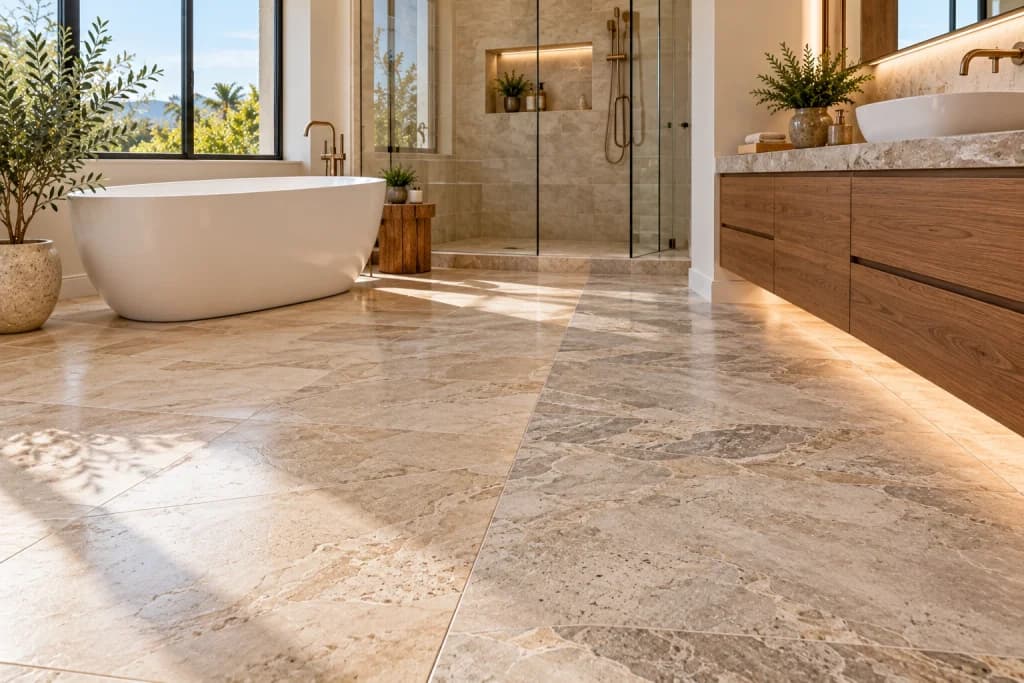
Tile and stone are popular choices because they transfer and retain heat effectively. Porcelain and ceramic tile are commonly used in bathrooms and can work well with properly installed radiant heating systems.
The flooring material is only one part of the equation. The heating system, underlayment, installation method, temperature limits, and manufacturer’s requirements all matter.
Before selecting materials, confirm that the specific flooring product is approved for use with the chosen heating system. This is especially important when considering materials other than tile or stone.
The cost of radiant heated flooring depends on the system, heated square footage, flooring installation, electrical requirements, and condition of the existing floor.
Published 2026 cost guides place electric radiant floor heating around $8 to $15 per square foot installed in many U.S. markets, while hydronic systems can vary based on the tubing, controls, and heat source required. Bathroom projects may also involve costs for thermostats, electrical work, floor preparation, and new flooring.
These figures should not be treated as a fixed San Diego price. Local labor rates, the existing electrical system, bathroom size, flooring choice, and project complexity can change the final cost.
Electric radiant heating is generally easier to consider for a single bathroom because it does not require the additional infrastructure associated with a hydronic system. Hydronic heating can make more sense when it is already part of a broader heating system.
The best time to determine the cost is during the bathroom design and planning stage. This allows the heating system to be considered alongside flooring, electrical work, and other remodeling requirements rather than added after the floor has already been completed.
Radiant floor heating is easier to evaluate when you look beyond the heating element itself. The surrounding floor, electrical system, layout, and remodeling schedule all affect the installation.
Radiant heating does not necessarily cover every square foot of a bathroom.
Permanent fixtures can affect the usable heating area. Cabinets, vanities, tubs, and other built-in elements may occupy portions of the floor where heating is unnecessary or impractical.
Before installation, map the bathroom carefully. The goal is to place heating where it contributes to comfort while avoiding unnecessary material and installation costs.
Electric radiant heating requires an appropriate electrical connection and properly selected controls.
The electrical requirements should be evaluated before installation rather than assumed. Depending on the system and existing electrical capacity, additional electrical work may be required.
A dedicated thermostat allows the system to be controlled independently. Programmable or smart controls can also help schedule heating around the times the bathroom is normally used.
The installation method can affect the finished floor height. This matters when the bathroom connects to a hallway, bedroom, or another finished space.
Changes in floor height can affect transitions, doors, cabinetry, and other details. The heating system should therefore be considered before the final flooring installation.
The condition of the subfloor also matters. A damaged or uneven surface may require preparation before the heating system and finished flooring are installed.
A bathroom remodel is often the most practical time to consider radiant heating because the flooring may already be removed.
Installing the system while the floor is accessible can make coordination easier than trying to modify a completed bathroom. It also allows the heating system to be planned alongside the flooring and other remodeling work.
If you are considering the project, discussing radiant heating during the initial design stage can help determine whether it fits the bathroom’s layout, electrical capacity, flooring selection, and budget.
Radiant heated flooring in bathrooms can be a worthwhile upgrade for San Diego homeowners who value warm, comfortable floors. It is not essential for most bathrooms in the region, but it can add a noticeable level of comfort, especially with tile or stone flooring.
Electric systems are often practical for individual bathroom projects, while hydronic systems involve more infrastructure and may be better suited to larger heating plans. Cost, available floor space, electrical requirements, flooring compatibility, and installation timing should all be considered before making a decision.
If you are planning a bathroom remodel, MBK Remodel can help you evaluate how flooring and heating options fit into the overall project design.
Can you install radiant heat under existing bathroom flooring?
In most cases, radiant heating is installed beneath the finished flooring, so adding it to an existing finished floor can require removing the flooring. The exact approach depends on the flooring material and heating system. For this reason, radiant heating is often easier to coordinate when a bathroom floor is already being replaced as part of a remodel.
Are heated bathroom floors expensive to run?
Operating costs depend on the heated area, system type, thermostat settings, electricity rates, insulation, and how frequently the system operates. Electric radiant floors can be used as supplemental, targeted heat rather than continuous whole-home heating. Scheduling the system around bathroom use can help avoid unnecessary operation.
Are heated floors safe to use in bathrooms?
Properly designed and installed radiant floor systems can be used in bathrooms. Electrical components, waterproofing, flooring materials, and controls must be installed according to applicable requirements and manufacturer instructions.
How long do radiant heated floors last?
The lifespan depends on the system, product quality, installation, operating conditions, and maintenance. The heating components are installed beneath the finished floor, so proper installation is particularly important because accessing them later can require removing flooring.