Expanding Your Master Bathroom: Borrowing Space vs Building a Bump-Out Addition
6/18/2026
6/18/2026
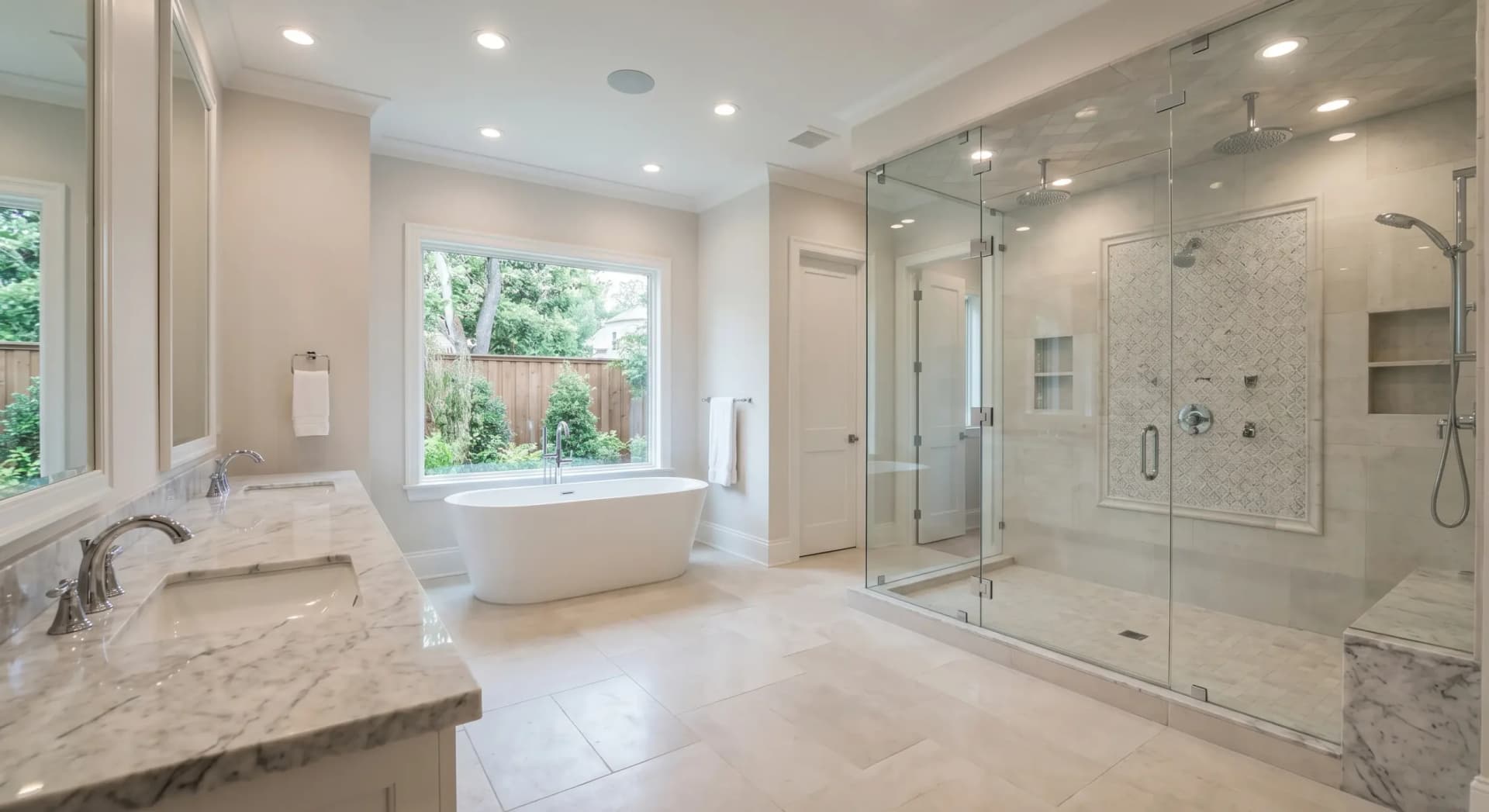
A cramped master bathroom is frustrating. You start your day bumping elbows and fighting for counter space. If you are tired of feeling squeezed, it is time for a change.
Expanding your master bathroom gives you the luxury suite you deserve. But how do you actually get that extra square footage? Generally, you have two main options. You can borrow existing space from inside your home, or you can build a structural bump-out. Let’s break down both strategies so you can decide which path is right for your remodel.
You have probably read articles telling you to paint the walls white or hang a larger mirror to make your bathroom feel bigger. Those visual tricks are fine for a quick weekend refresh. However, they do not give you actual room for a soaking tub or a double vanity.
A true master bathroom expansion requires real construction. It means knocking down walls, moving plumbing, and permanently altering your floor plan. This guide is for homeowners who are ready for a real, physical transformation to upgrade their daily routine.
Borrowing space means shifting your interior walls to make the bathroom larger. You keep the exterior of your house exactly the same. Instead, you simply change the layout of the rooms inside. This floor plan shift is often the fastest way to gain extra square footage during a bathroom remodeling project.
To make your bathroom bigger, that space has to come from somewhere else. The most common target is an adjacent walk-in closet. You can shrink the closet slightly or move it to another wall entirely.
Another great option is an unused guest bedroom. Taking just a few feet from a spare room can double the size of your bathroom without ruining the bedroom. Finally, look for dead hallway space. Sometimes, simply pushing the bathroom door further out into a wide hallway provides exactly the footprint you need.
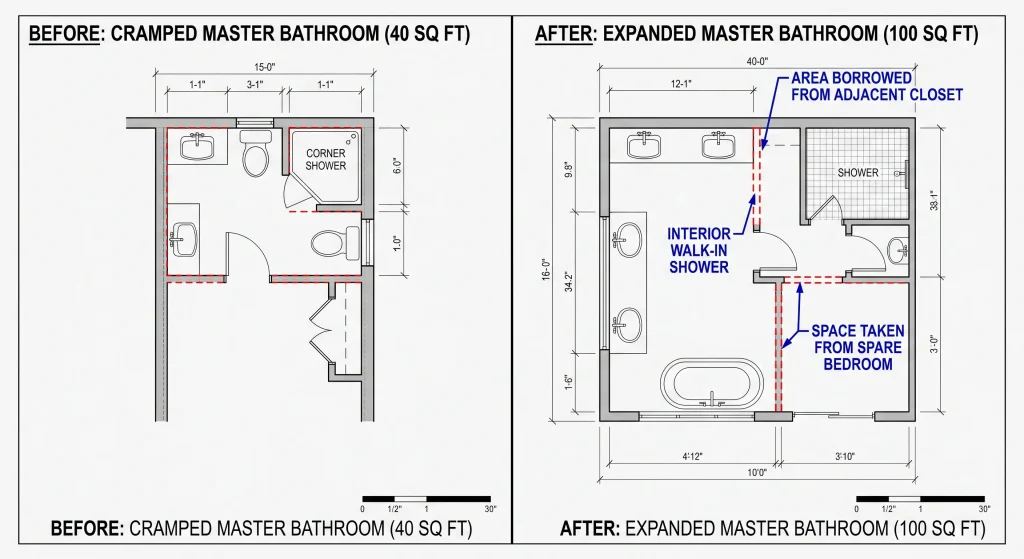
There are clear advantages to staying inside your existing footprint. First, you save money. You do not need to pour a new concrete foundation or extend your roofline. Because of this, the project timeline is usually much shorter and less impacted by bad weather.
On the downside, borrowing space requires sacrifice. You are actively taking square footage away from another room. Losing closet space means less storage for your clothes. Furthermore, cutting too deeply into a bedroom could potentially affect your home’s resale value if it no longer qualifies as a legal bedroom.
If you cannot spare any interior space, a bump-out is your best option. A bump-out is a micro-addition. It extends your exterior wall outward, making it one of the most efficient types of bathroom additions. You get a bigger bathroom without the massive expense of building an entirely new wing on your house.
Bumping out is a major construction project. For very small extensions, builders can sometimes use cantilevered floor joists. This means the new space simply hangs past your existing foundation.
For larger bump-outs, you will need to pour new concrete footers in your yard to support the weight. In addition, your contractor must carefully tie the new structure into your existing exterior siding and roofline. This critical step ensures the addition is completely waterproof and visually matches the rest of your home.
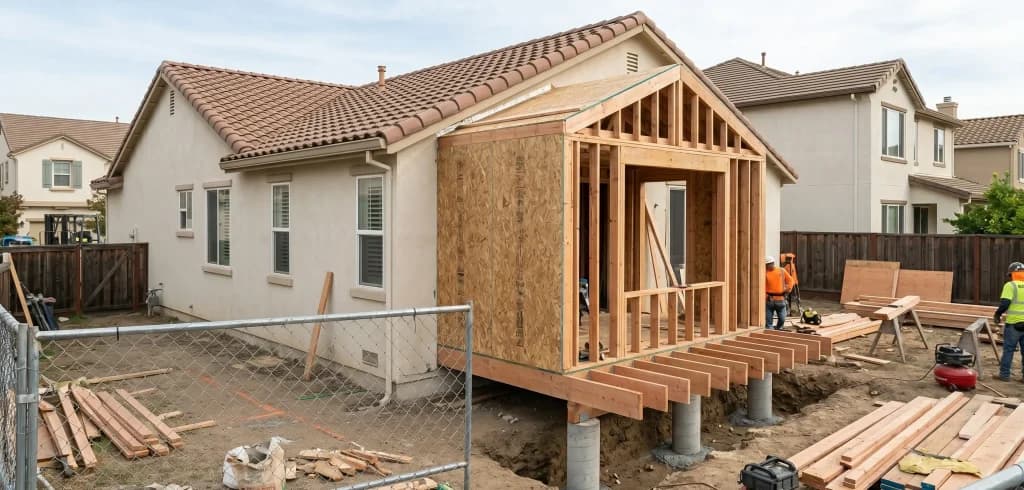
The biggest benefit of a bump-out is keeping your current floor plan intact. You do not lose a single closet or compromise a bedroom. Plus, adding brand new square footage allows for massive luxury features, like a sprawling walk-in shower or a freestanding tub with a view.
However, this strategy comes with distinct challenges. Extending your home outward requires city zoning approvals and strict property line setback checks. Because you are dealing with roofing, siding, and foundation work, the costs are significantly higher. Additionally, you should expect a longer construction timeline compared to a simple interior remodel.
Deciding between borrowing space and building a bump-out ultimately depends on your specific home and goals. To make things easier, we have broken down the main differences below.
| Feature | Borrowing Interior Space | Building a Bump-Out |
| Cost | Generally lower | Higher |
| Project Timeline | Faster | Slower |
| Interior Impact | Loses closet or bedroom space | Keeps existing rooms intact |
| Exterior Impact | None | Changes the home’s footprint |
| City Permitting | Standard interior permits | Strict zoning and exterior permits |
Budget is usually the deciding factor for any remodeling project. Moving interior walls is significantly more cost-effective. You are mostly paying for framing, drywall, and finishing materials. Therefore, the cost per square foot remains relatively low.
On the other hand, a bump-out requires heavy exterior construction. You have to pay for a new foundation, exterior siding, and roof extensions. This drastically increases your overall cost. However, a bump-out adds brand new square footage to your house. This extra space ensures your bathroom makeover is worth it when it is time to sell your property.
Every major remodeling project requires city permits. But the approval process changes completely based on your expansion strategy. If you borrow interior space, you only need standard building, plumbing, and electrical permits. This paperwork is usually processed quickly.
Conversely, a bump-out changes the physical footprint of your house. This triggers strict exterior zoning reviews. The city must verify that your new exterior wall does not cross property line setbacks. As a result, getting these approvals takes much longer, which extends your overall project timeline before construction even begins.
Expanding a bathroom always involves moving essential utilities. Both strategies require moving your “wet walls”—the walls housing your main plumbing pipes. If you borrow interior space, relocating pipes and electrical wiring is fairly straightforward. Your contractor simply runs the lines through the newly framed interior walls.
Bumping out introduces a few extra challenges. Because you are building a completely new exterior zone, you must extend your home’s HVAC ductwork. This ensures your new bathroom stays warm in the winter and cool in the summer. Furthermore, your contractor has to carefully insulate the new exterior plumbing to protect the pipes from freezing temperatures.
Choosing the right expansion strategy can feel overwhelming. Fortunately, you do not have to make the decision alone. At MBK Remodel, our design-build experts evaluate your property to find the absolute best solution for your home and budget.
We handle the entire process from start to finish. From drafting the perfect floor plan to securing city permits and managing the final construction, we guarantee a flawless execution. Whether we are shifting a closet wall or pouring a new foundation, our team will deliver the luxury master suite you have always wanted.
Ready to transform your daily routine? Contact MBK Remodel today to schedule your project consultation.
Do I need a permit to bump out a bathroom?
Yes. Any structural bump-out requires extensive building permits and zoning approvals. The city must ensure the new addition meets structural safety codes and stays legally within your property line setbacks.
How much space do I need for a walk-in shower?
A functional walk-in shower requires a minimum space of 36 by 36 inches. However, for a true luxury feel and to prevent water from splashing outside the wet zone, you should aim for a footprint of at least 48 by 60 inches.
Is it cheaper to borrow interior space or build a bump-out?
Borrowing space is almost always cheaper. Shifting interior walls avoids the expensive exterior construction costs associated with a bump-out, such as pouring concrete footers, framing new exterior walls, and extending your roofline.