How to Deal with Common Bathroom Plumbing Problems?
7/14/2026
7/14/2026
Bathroom plumbing problems can range from minor leaks to serious pipe issues that cause water damage. Identifying the problem early and fixing it quickly can help prevent expensive repairs while keeping your bathroom safe and functional.
Many plumbing issues develop gradually and are easy to overlook. This guide explains the most common bathroom plumbing problems, what causes them, and when it’s time to seek professional help.
A dripping faucet or slow drain may seem like a small inconvenience, but minor plumbing issues often become larger problems if left untreated.
Leaks can damage flooring, cabinets, and walls, while clogged drains and faulty fixtures reduce the comfort and efficiency of your bathroom. In some cases, hidden leaks may even lead to mold growth or structural damage.
Regular inspections and timely repairs help protect your plumbing system and avoid unnecessary expenses. If you’re already planning improvements, a bathroom remodeling project is an ideal opportunity to replace aging plumbing and fixtures at the same time.
Most bathroom plumbing issues have simple causes, but the correct solution depends on the condition of the plumbing system and how long the problem has existed.
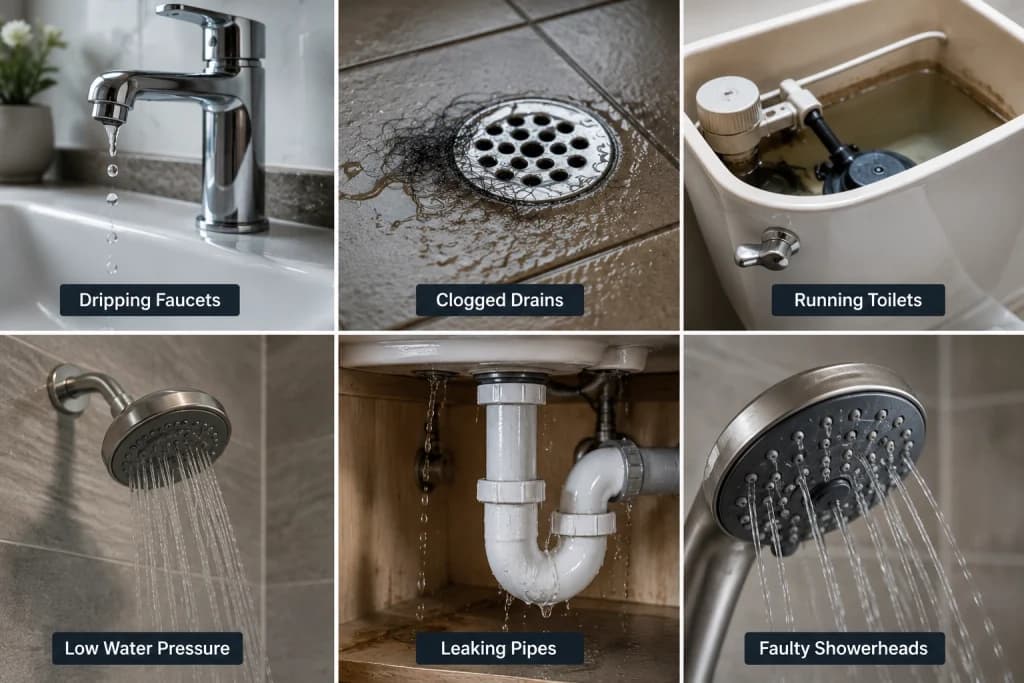
A dripping faucet is usually caused by a worn washer, damaged cartridge, or faulty valve. Although the leak may appear minor, it can waste a significant amount of water over time.
Replacing worn internal components often solves the problem. If the faucet is old or heavily corroded, replacing the entire fixture may be the better long-term solution.
Bathroom sink and shower drains commonly become clogged with hair, soap residue, toothpaste, and other debris.
Small clogs can often be cleared using a drain snake or by cleaning the drain stopper. Avoid using harsh chemical drain cleaners regularly, as they may damage older pipes.
If drains clog repeatedly, it may indicate a larger blockage deeper within the plumbing system that requires professional attention.
A toilet that continues running after flushing usually has a worn flapper, faulty fill valve, or improperly adjusted float.
Besides increasing your water bill, a constantly running toilet places unnecessary strain on the plumbing system. Fortunately, many of these parts are inexpensive and can be replaced without replacing the entire toilet.
Low water pressure in the bathroom can make showers and faucets less effective.
Common causes include:
Cleaning faucet aerators and showerheads may restore normal pressure, but persistent issues should be inspected by a professional.
Leaking bathroom pipes can occur behind walls, beneath sinks, or under flooring. Even small leaks can cause water damage if they go unnoticed.
Warning signs include:
Prompt bathroom plumbing repair helps prevent damage from spreading and reduces the risk of mold.
If you’re considering updating an older bathroom, reviewing the bathroom renovation process can help you understand when plumbing upgrades are typically completed during a remodel.
A leaking or poorly performing showerhead is often caused by mineral deposits, worn seals, or internal wear.
Cleaning the showerhead with a descaling solution may improve water flow. If the fixture continues leaking or delivers uneven spray patterns, replacing it is usually the most effective solution.
Modern showerheads also improve water efficiency while providing better performance, making them a worthwhile upgrade during a bathroom renovation.
Some bathroom plumbing problems can be resolved with basic maintenance, but others require professional repairs to prevent further damage.
You should contact a professional if you notice:
Ignoring these issues can lead to more expensive repairs and affect other areas of the home. Professional inspections help identify the root cause instead of only treating the visible symptoms.
Routine maintenance is the best way to avoid unexpected plumbing repairs. Small preventive measures can extend the life of your plumbing fixtures and reduce the risk of costly water damage.
Simple habits can keep your bathroom plumbing working efficiently for years.
Some recommended maintenance practices include:
Regular maintenance also helps you identify small issues before they become major repairs.
Older bathrooms often experience recurring plumbing problems because the fixtures and piping have reached the end of their lifespan.
You may want to consider upgrading your bathroom if you experience:
Looking at current bathroom renovation trends can provide ideas for combining plumbing improvements with a more modern and functional design.
A bathroom remodel is more than a cosmetic upgrade. It also provides an opportunity to replace aging plumbing, improve fixture performance, and reduce the risk of future leaks.
During a remodel, professionals can inspect hidden plumbing, replace worn supply lines, install water-efficient fixtures, and update outdated piping where needed. These improvements help create a more reliable plumbing system while enhancing the overall functionality of the space.
If your existing bathroom feels cramped or no longer meets your needs, bathroom additions can also provide extra space while allowing plumbing upgrades to be completed as part of the project.
Whether you’re planning a simple renovation or a complete redesign, working with experienced professionals helps ensure both the visible finishes and the plumbing behind the walls are built to last.
If you’re ready to improve your bathroom, contact MBK Remodel to discuss your remodeling goals.
What is the most common bathroom plumbing problem?
Clogged drains and dripping faucets are among the most common bathroom plumbing problems because they occur through everyday use and normal wear.
Can I fix a leaking bathroom pipe myself?
Minor leaks at visible connections may be repairable, but hidden or recurring leaks should be inspected by a professional to prevent water damage.
Why does my bathroom have low water pressure?
Low water pressure is often caused by clogged fixtures, leaking pipes, corroded plumbing, or issues with the home’s water supply.
Can a bathroom remodel solve recurring plumbing issues?
Yes. A bathroom remodel allows outdated plumbing, worn fixtures, and aging supply lines to be replaced, helping prevent future plumbing problems while improving the overall function of the space.