Adding a Butler’s Pantry: The Ultimate Upgrade for Entertaining
10/1/2026
10/1/2026
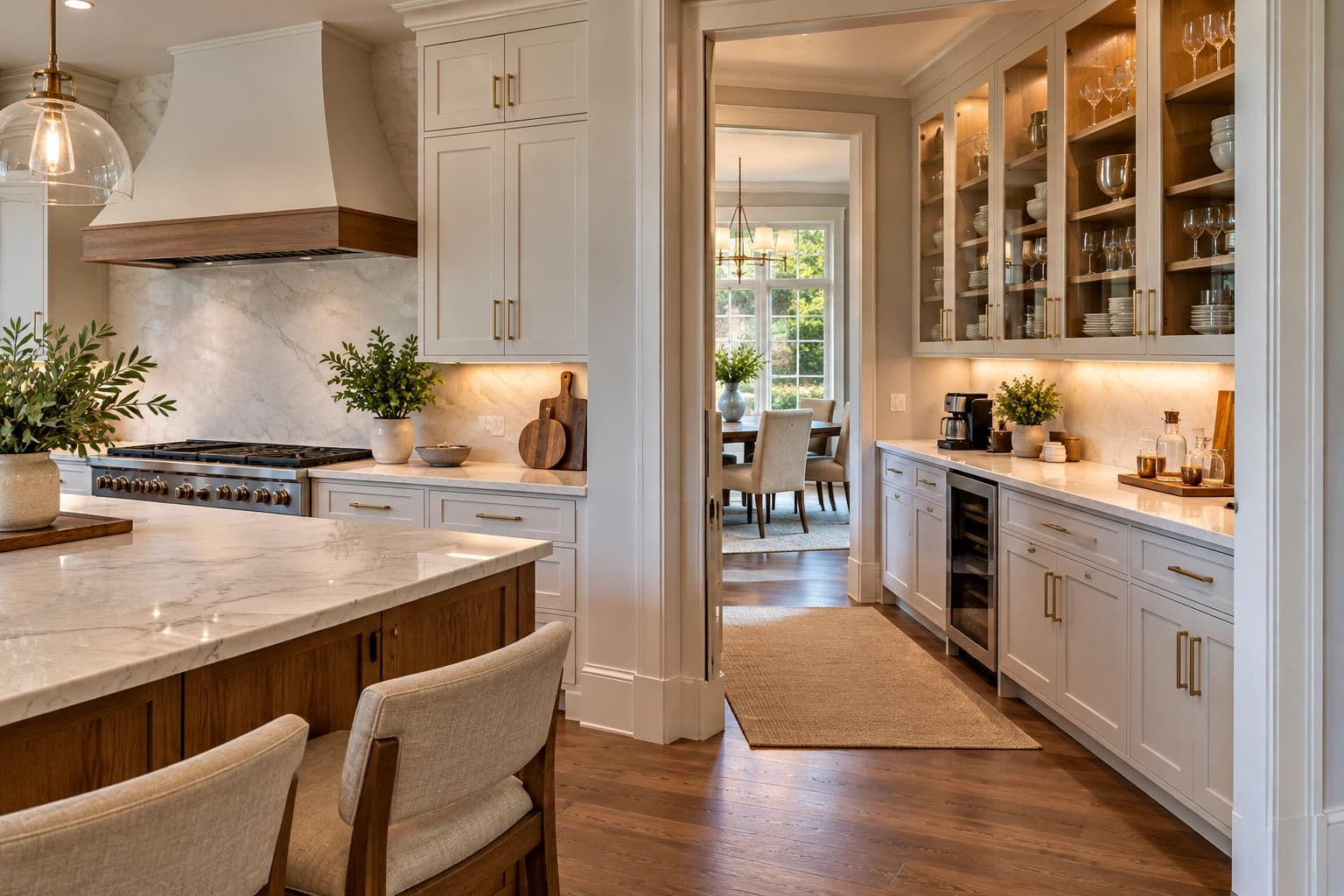
Adding a butler’s pantry can give your kitchen more storage, preparation space, and organization without changing how the main kitchen looks and feels. It creates a practical transition between the kitchen and entertaining areas while keeping everyday clutter out of sight.
A well-designed butler’s pantry can serve as a food preparation area, serving station, appliance storage zone, or beverage center. For homeowners planning a kitchen remodel, it can also provide an opportunity to make better use of available space and create a more efficient workflow.
A butler’s pantry is a secondary space connected to or located near the kitchen. Traditionally, it was used for storing and preparing food, serving dishes, glassware, and other items before meals.
Modern butler’s pantries can serve several purposes. Some are compact areas between the kitchen and dining room, while others function almost like a second working kitchen.
The main idea is simple: move preparation, storage, and serving tasks out of the primary kitchen when possible. This can help keep the main kitchen cleaner and make entertaining easier.
The right features depend on how you plan to use the space. A pantry designed mainly for storage will have different requirements than one used for entertaining and food preparation.
Counter space makes a butler’s pantry much more useful. It gives you an area for assembling appetizers, preparing drinks, organizing dishes, or placing appliances.
When choosing the countertop layout, consider how much workspace you actually need. A continuous work surface can be particularly useful because it allows multiple tasks to happen without interfering with the main kitchen.
Storage is one of the biggest advantages of a butler’s pantry. Cabinets can hold serving dishes, cookware, small appliances, pantry items, and items that do not need to remain visible in the main kitchen.
Deep cabinets can accommodate larger appliances, while drawers can keep utensils and smaller items organized. Open shelving can provide quick access to frequently used dishes or glassware.
A sink is not required in every butler’s pantry, but it can add significant functionality.
A small sink can be useful for rinsing produce, filling containers, washing glasses, or handling minor cleanup away from the main kitchen. If plumbing is included, it should be considered early in the design process because the location of water and drainage can affect the overall layout.
A butler’s pantry can provide a dedicated home for appliances that take up valuable counter space in the main kitchen.
Depending on your needs, the space might accommodate a coffee maker, toaster, blender, microwave, or other small appliances. A beverage station can also include dedicated storage for mugs, glasses, drinkware, and supplies.
Good lighting makes the pantry easier and safer to use. Combine general lighting with task lighting over countertops or other work areas.
Electrical outlets should also be planned around the appliances you expect to use. This is especially important when several small appliances will operate in the same area.
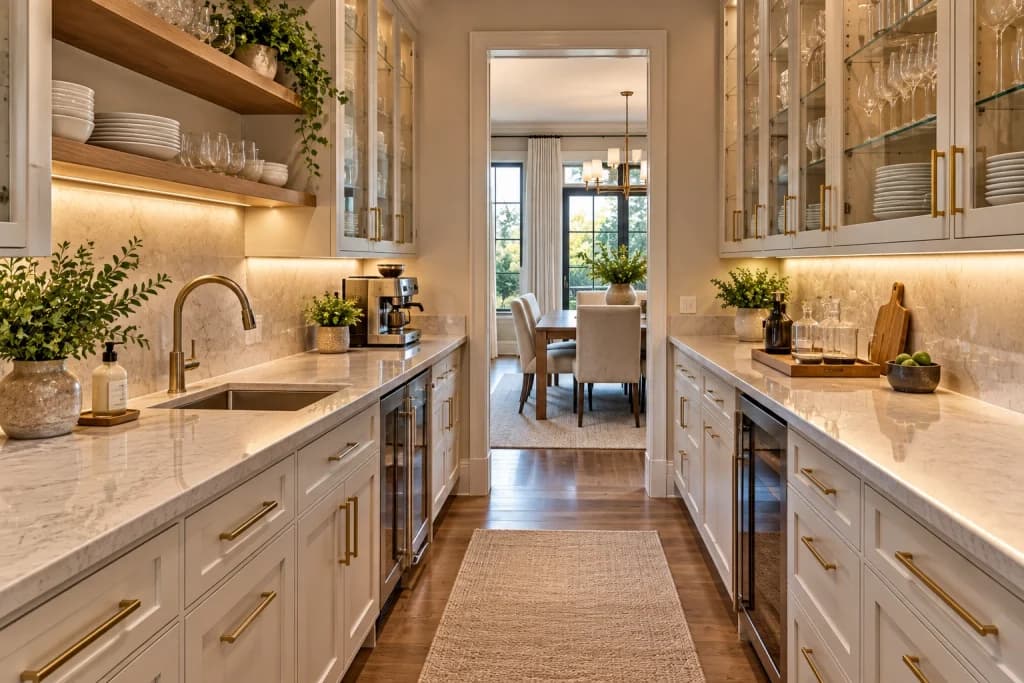
A butler’s pantry can be especially valuable when you regularly host family gatherings, dinners, or other events. The goal is to create a space that supports entertaining without creating additional work.
Use the countertop as a staging area for prepared food, plates, serving utensils, and drinks. This allows you to organize everything before bringing it into the dining or entertaining area.
A dedicated staging area can also help separate preparation from presentation. Guests can enjoy the finished meal without seeing every step involved in getting it ready.
A beverage station can turn an unused section of the pantry into a practical entertaining feature.
Consider placing the coffee maker, mugs, glasses, and supplies together. If the space allows, additional storage can accommodate drinkware and serving accessories.
Keeping these items together means guests or family members can access drinks without repeatedly entering the main food preparation area.
A butler’s pantry is a natural place to store items used primarily for entertaining. Dinnerware, serving platters, wine glasses, and specialty pieces can be organized close to where they will be used.
Cabinet interiors should be planned around the size and quantity of these items. Adjustable shelving can make the storage more flexible as your needs change.
Instead of keeping every appliance on the main kitchen counter, use the butler’s pantry for appliances that are used regularly but do not need to remain visible.
A dedicated appliance area can make the main kitchen feel less crowded while keeping frequently used equipment within easy reach.
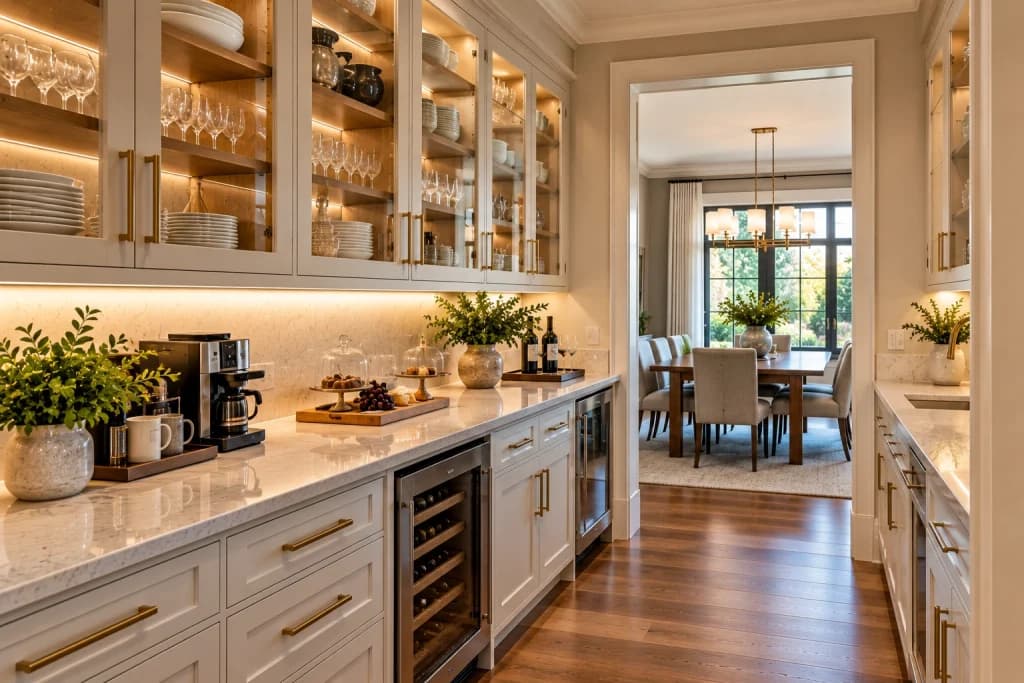
Good design is about more than fitting cabinets into an available room. The pantry should make movement between preparation, storage, serving, and cleanup feel natural.
A butler’s pantry is often positioned between the kitchen and dining area because this location creates a convenient connection between food preparation and serving.
However, the best location depends on the existing floor plan. Consider how people move through the home, where food will be prepared, and how the pantry will connect to the kitchen.
There is no single required size for a butler’s pantry. The space should be based on its intended purpose and the available floor plan.
A smaller area may be enough for cabinets, countertops, and appliance storage. A larger pantry can accommodate additional counter space, a sink, more storage, or a dedicated beverage station.
The important consideration is functionality. A smaller, well-planned pantry can be more useful than a larger space with an inefficient layout.
Think about the tasks that will happen in each space.
For example, frequently used serving items should be easy to access, while less-used items can occupy higher or deeper storage. If the pantry includes a sink, it should be positioned where it supports preparation or cleanup without creating unnecessary traffic.
The relationship between the two spaces matters as much as the individual features. The pantry should reduce congestion rather than simply add another room.
For homeowners who entertain frequently or need additional storage, a butler’s pantry can be a practical addition to a kitchen remodel.
Its value comes from how well it solves specific problems. If your main kitchen lacks storage, counter space, appliance organization, or a convenient serving area, a pantry may address several of those needs at once.
It is also important to consider the space required. Adding a pantry may affect the overall floor plan, storage elsewhere in the home, or the relationship between the kitchen and adjacent rooms.
Before committing to the design, think about how you actually use your kitchen. The best butler’s pantry is not necessarily the largest one. It is the one that makes everyday tasks and entertaining more convenient.
A butler’s pantry can be more than an extra storage area. When planned around the way you cook and entertain, it can create dedicated preparation space, organize serving items, accommodate small appliances, and help keep the main kitchen less cluttered.
The key is to design the space around your actual needs rather than adding features simply because they are popular. Consider the pantry’s location, storage requirements, countertop space, lighting, electrical needs, and potential plumbing before finalizing the design.
Can a butler’s pantry be added to an existing kitchen?
Yes, a butler’s pantry can sometimes be added during an existing kitchen remodel. The feasibility depends on the home’s floor plan, available space, and the changes required for cabinetry, electrical connections, plumbing, and other features.
What should you put in a butler’s pantry?
Common features include cabinets, countertops, shelving, small appliances, dinnerware storage, glassware storage, and serving supplies. Depending on the layout, homeowners may also include a sink or beverage station.
Does a butler’s pantry need a sink?
No. A sink is optional, but it can make the pantry more versatile for food preparation, rinsing, beverage service, and light cleanup. Whether it makes sense depends on the space and how you plan to use it.
Can a butler’s pantry increase kitchen functionality?
Yes. A thoughtfully designed pantry can provide additional storage and workspace while moving certain preparation, serving, and appliance-related tasks away from the main kitchen. Its usefulness depends on the layout and how well the features match the homeowner’s needs.